
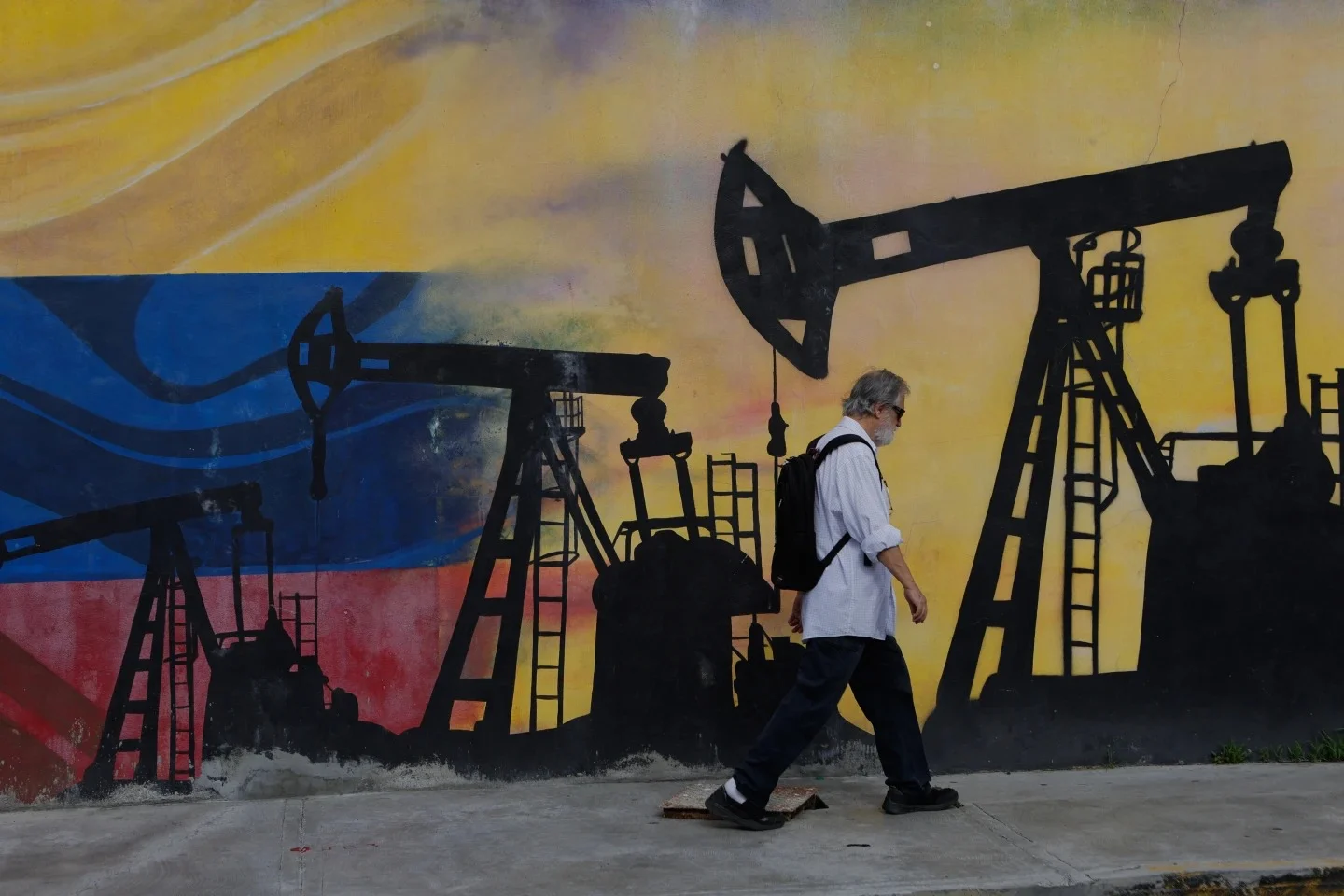
The White House has provided further clarity on President Donald Trump’s recent announcement regarding a massive oil agreement in Venezuela. Officials confirmed on Monday that the U.S. is establishing a private joint venture with North American Blue Energy Partners (NABEP), a firm owned by Venezuelan businessman Alejandro Betancourt. This arrangement grants the Pentagon’s Office of Strategic Capital a 35% ownership stake in the venture, which is set to oversee 17 oil fields containing an estimated 65 billion barrels of proven reserves.
Under the terms of the 100-year agreement, which was signed by Defense Secretary Pete Hegseth and Secretary of State Marco Rubio, the U.S. is guaranteed the right to purchase 20% of the output at cost. The White House stated that many of these fields were previously held by Chinese or Russian entities. Betancourt, whose company already operates as the second-largest firm in Venezuela behind Chevron, noted that the nation is “blessed with an abundance of natural resources, hardworking people and untapped potential.” He added that the partnership aims to “unleash that potential to the great benefit of both Venezuelans and Americans.”
The administration asserted that the deal will be executed at “zero cost” to the United States and noted that the government will retain veto power over board members, the majority of whom must be U.S. citizens. Furthermore, the agreement stipulates that NABEP will be subject to U.S. law and the jurisdiction of American courts, with oversight from U.S. auditors and legal advisers. Betancourt’s firm has committed to investing $100 billion into new oil infrastructure, supported by a workforce of over 5,000 employees and 10,000 contractors.
The initiative follows the January military mission that resulted in the capture of former President Nicolás Maduro on drug trafficking and narcoterrorism charges. While President Trump has touted the deal as a means to eventually lower gas prices and replenish strategic reserves, he acknowledged that the impact will not be immediate. “It could be a little bit” before consumers see price relief, Trump said, dismissing concerns from analysts who suggest that reviving the country’s dilapidated energy sector could take years.
The announcement has drawn scrutiny from Capitol Hill. Senator Jack Reed, the ranking Democrat on the Senate Armed Services Committee, criticized the use of the military to support a private oil venture, labeling it a “blatant abuse of power and taxpayer dollars.” He has demanded a full accounting of the legal authority behind the agreement. Similarly, Representative Rick Crawford, the Republican chairman of the House Intelligence Committee, stated that he expects the administration to provide comprehensive details on the deal “sooner rather than later.”
Meanwhile, Venezuelan acting President Delcy Rodríguez has defended the agreement, framing it as a necessary step to modernize the nation’s oil industry while maintaining that Venezuela’s sovereignty remains intact. The administration plans to continue its focus on energy capacity, with President Trump scheduled to meet with oil refiners to discuss increasing domestic gasoline production. This meeting comes as the ongoing war in Iran has pushed national average gas prices to $4.08, marking a 28% increase over the past year according to AAA data.
The upcoming discussion will include Interior Secretary Doug Burgum, Energy Secretary Chris Wright, and Jarrod Agen, director of the White House National Energy Dominance Council. Officials emphasized that expanding refinery capacity is essential to processing the heavy crude expected from the Venezuelan fields, though energy experts continue to warn that the project faces significant political risks from potential future administrations in both Washington and Caracas. The report also notes that the company said Betancourt had been involved in the Venezuelan oil industry for more than 15 years and said the company has more than 5,000 employees and more than 10,000 contractors. The report also notes that “If it was two years, you know, that’s a short period of time,” he said. The report also notes that days after Trump announced what he described as the biggest oil deal in history, the Trump administration released more details on Monday night. The report also notes that but Trump and his aides are pitching it as a chance to develop a new oil giant in the Western Hemisphere, the sweeping agreement has been met with skepticism from analysts who say it will take years to revive Venezuela’s production. The report also notes that the deal won’t affect US gas prices anytime soon. The report also notes that “It was this unbelievable value that was sitting dormant,” Trump said of Venezuelan oil.







Comments