
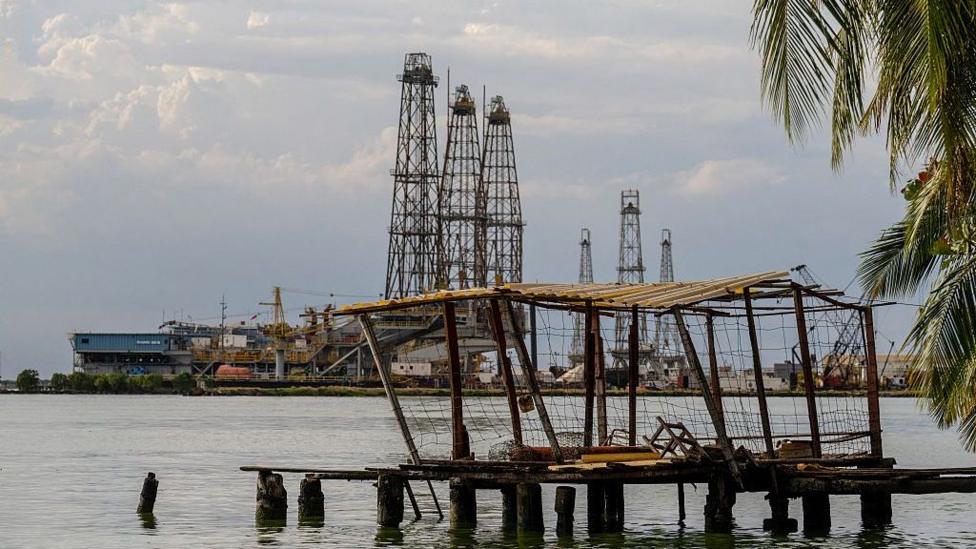
President Donald Trump has announced a landmark agreement granting the United States control over more than 65 billion barrels of Venezuela’s proven oil reserves. Describing the move as a historic transaction, Trump stated on social media that the deal would more than double American oil reserves, significantly increase domestic supply, and ultimately lower gasoline prices for consumers.
The agreement follows the US special forces operation on January 3, which resulted in the capture of then-President Nicolás Maduro and his wife, Cilia Flores. In the immediate aftermath of that raid, the Trump administration declared it would oversee Venezuelan governance until a secure and proper transition could be established, asserting indefinite control over the nation’s oil sales.
Venezuela’s interim President, Delcy Rodriguez, has publicly supported the arrangement, characterizing it as a vital step toward the country’s economic revival. According to Rodriguez, the deal involves the development of 17 strategic oil fields and is expected to generate nearly $100 billion in private investment, alongside more than $209 billion in tax revenue for the Venezuelan state.
Secretary of State Marco Rubio praised the pact as a significant victory for both nations, noting that it would facilitate the reconstruction of Venezuela’s economy and support thousands of high-paying jobs. Trump confirmed that Rubio and Defence Secretary Pete Hegseth negotiated the terms through a partnership with private business, emphasizing that the initiative would be executed at no cost to American taxpayers.
While specific details regarding the partnership remain limited, a US official speaking to CBS News indicated that the US government will retain 55% control of a joint venture with an experienced private operator in Venezuela. The agreement reportedly grants this venture a 100-year concession to operate within the designated oil fields.
The scale of this arrangement appears to exceed the scope of the US-led Coalition Provisional Authority’s management of Iraqi oil revenues following the 2003 invasion. Despite the ambitious scope, the official text of the agreement between Washington and Caracas has not yet been released, and it remains unclear whether the deal will encounter legal or constitutional challenges within Venezuela.
Venezuela currently holds the world’s largest proven oil reserves, estimated at 303 billion barrels, though production has seen a sharp decline since its peak in the late 1990s. Trump has urged US oil firms to invest at least $100 billion to restore the country’s oil infrastructure.
The President has justified the move by citing past grievances, claiming that Venezuela had previously unilaterally seized and sold American assets and platforms, resulting in losses of billions of dollars. He maintains that this new framework will provide the necessary stability to modernize the industry and enhance energy security across the hemisphere.
Interim President Rodriguez echoed these sentiments, stating that the investments will contribute to the recovery of the industry and foster greater balance in international energy markets. As the administration moves forward, the focus remains on leveraging these vast resources to address domestic price pressures that have intensified amid the ongoing conflict in Iran. The report also notes that but he claimed the agreement was reached “at no cost to the American Taxpayer”, he did not elaborate on the partnership or describe possible commitments and terms for the US in the deal. The report also notes that from boom to bust: A rare look inside one of Venezuelaâs once prosperous oil towns. The report also notes that which apparently grants the US direct governance over a foreign country’s sovereign national resources, trump gave few specifics of the highly unusual agreement.



Comments