
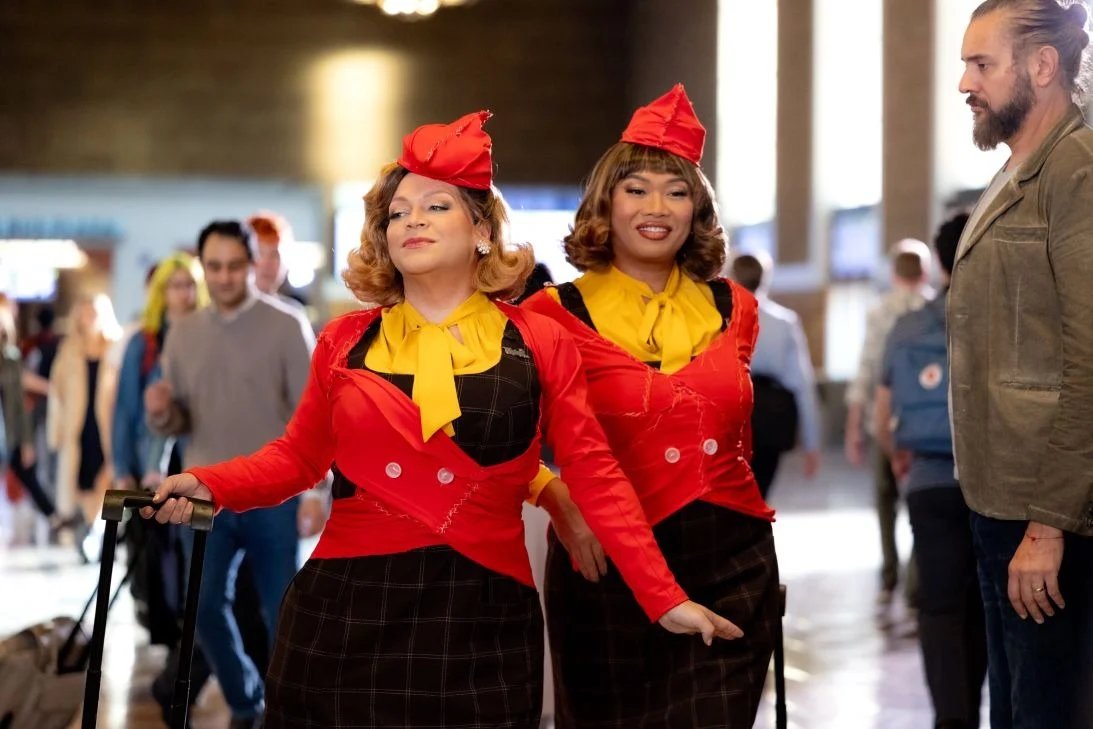
When director Adam Shankman began work on the disaster movie parody “Stop! That! Train!,” he found himself crafting a project defined by giddy joy and immature humor that left him questioning his own target audience. The film, which hits theaters this Friday with an R rating, is not intended for children despite Shankman jokingly calling it a kids’ movie—if one ignores the genital-focused humor, scattered profanity, and scenes involving puppet drug use. It is a 92-minute exercise in camp, filmed over a tight 19-day schedule that showcases celebrity cameos from the likes of Sarah Michelle Gellar, Nicole Richie, Jesse Tyler Ferguson, and Raven-Symoné.
The narrative follows Tess, portrayed by drag artist Ginger Minj, and DeeDee, played by Jujubee, two employees at the Stank Rail commuter line. The duo dreams of traveling across the country, specifically hoping to visit the Dakotas, but their journey is interrupted when the train’s brakes fail during a massive weather event known as a “stormaganza.” They are joined in their struggle to save the day by the President of the United States, played by RuPaul. Throughout the production, Shankman noted that he imagined the story occurring in a reality where the characters simply existed without their gender being a topic of conversation.
Stylistically, the movie draws from genre classics like the “Naked Gun” series and 1980’s “Airplane!,” relying on sight gags, puns, and slapstick. Despite online speculation regarding the use of artificial intelligence for special effects—a claim Shankman has explicitly denied—the director maintains the film is pure, humorous satire. There is not a single joke centered on the concept of drag itself. This approach places the film within a growing wave of modern entertainment, such as “Scary Movie” and new entries in the “Naked Gun” and “Spinal Tap” franchises, that seeks to reclaim absurdity as a source of genuine comedy.
Drag historian Joe E. Jeffreys of the NYU Tisch School of the Arts notes that while cross-dressing has been a staple of performance since the dawn of cinema—dating back to Gilbert Sarony in an 1901 Thomas Edison silent short—it has historically functioned as a narrative crutch. Usually, big-name male stars used cross-dressing as a comedic device to escape difficult situations, seen in films like “Some Like It Hot” or “Tootsie.” Even in the 1990s, movies like “The Adventures of Priscilla, Queen of the Desert” or “To Wong Foo, Thanks for Everything!” typically cast cisgender men in drag roles, whereas “Stop! That! Train!” presents its drag queens as established, authentic characters.
The film’s release comes during a period of intense political polarization regarding drag performance in the United States, with several states, including Tennessee and Texas, moving to restrict public shows. By showcasing the comedic talents of the performers rather than focusing solely on lip-syncing, the film aims to disarm critics by highlighting the artistry behind the craft. Jujubee expressed confidence that even those who claim to dislike the concept of drag would find the movie enjoyable and accessible, as the tropes of the disaster genre remain familiar to all viewers.
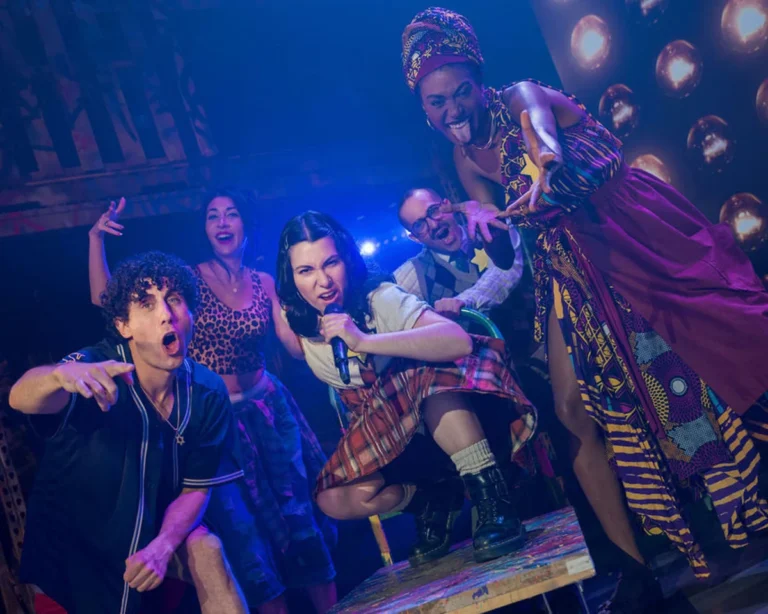
For Shankman, the core goal is providing a 90-minute reprieve from the exhausting nature of contemporary life. By inviting audiences to sit together and lose themselves in irony and silliness, he hopes to offer a meaningful distraction from societal anger. In the current cultural landscape, where inane comedies and gender-bending revivals like “Titanique” and “Oh, Mary!” are thriving on Broadway, “Stop! That! Train!” stands as an unapologetic attempt to let stupidity wash over the audience as a positive, communal experience. The report also notes that there’s the occasional swear word, a shot of a puppet using drugs and repeated instances of naughty passengers and crew misbehaving as they veer toward a killer storm in a runaway train, in addition to a couple of gags about a train conductor’s genitals. The report also notes that and yet, amid a political environment that has sought in recent years to portray drag queens as degenerates out to offend any and all decent sensibilities, the most remarkable part of “Stop. The report also notes that train!” may well be just how accessible it is to mainstream audiences. The report also notes that and very few about gays and lesbians, there are no jokes about race or religion. The report also notes that the film’s biggest controversy has been speculation about whether it used artificial intelligence to generate special effects— accusations Shankman has denied.) “The movie is, from a humor standpoint, as politically free as you can be, and I did that intentionally,” said Shankman, who previously directed films like “Hairspray” (2007) and “A Walk to Remember”, there’s not even a single joke about drag. (So far. The report also notes that (2002). “I made a comedy-forward movie. The report also notes that the fact that it is populated by these drag artists is the most transgressive part of it.”. The report also notes that they must contend with both needy passengers and catty colleagues, when they lose their jobs and then con their way into positions aboard the much fancier Glamazonian Express.

Comments