
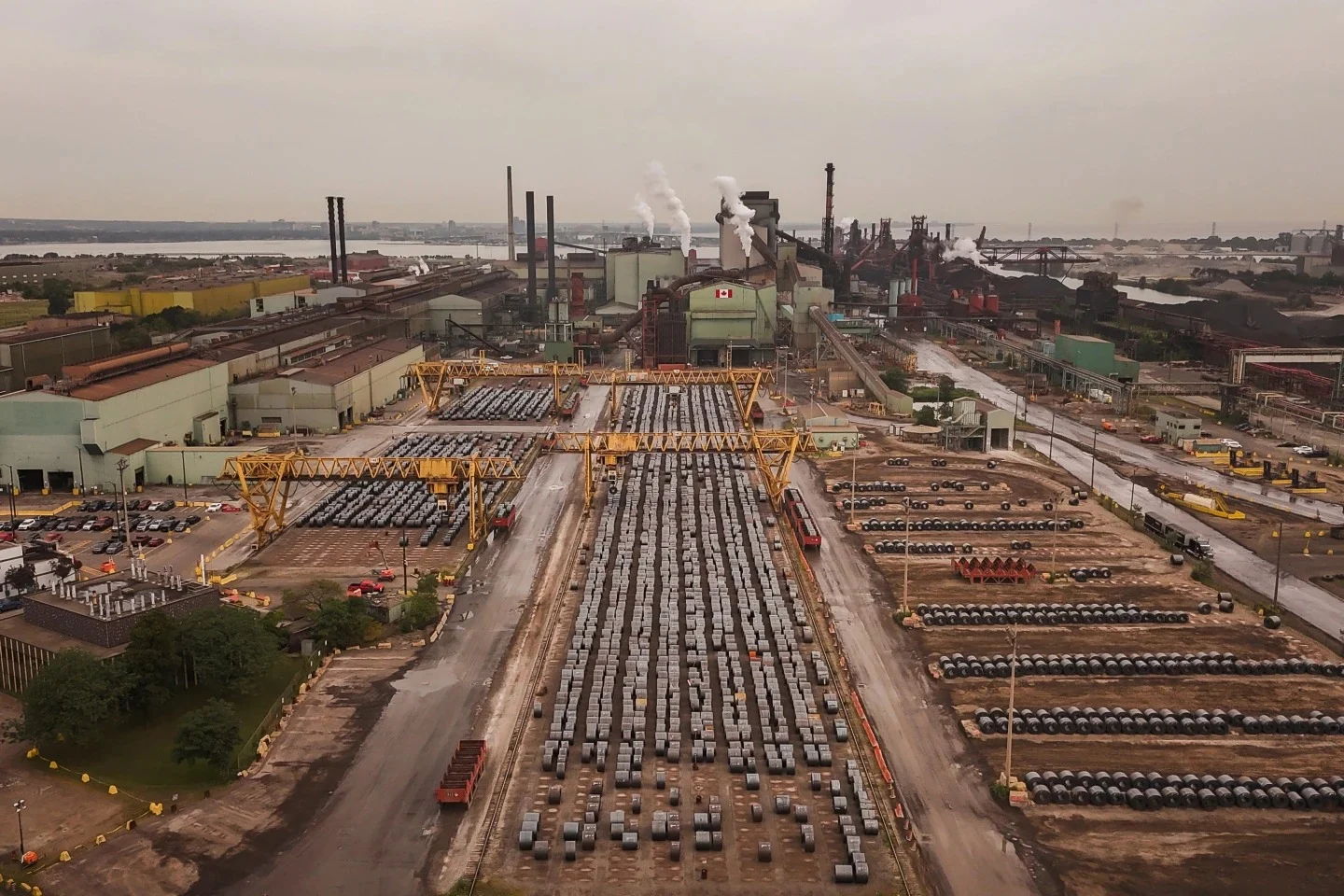
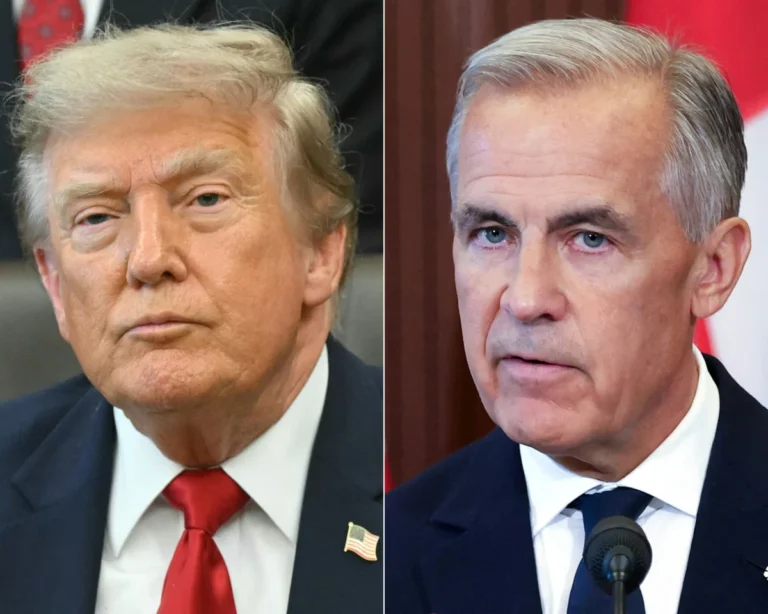
The long-standing economic partnership between the United States and Canada has faced significant strain throughout President Donald Trump’s second term, marked by a series of aggressive tariff threats and retaliatory measures. Trump has frequently targeted Canada’s economy, at one point even suggesting the nation could become the “51st state.” This volatile atmosphere has left businesses and consumers on both sides of the border grappling with persistent uncertainty.
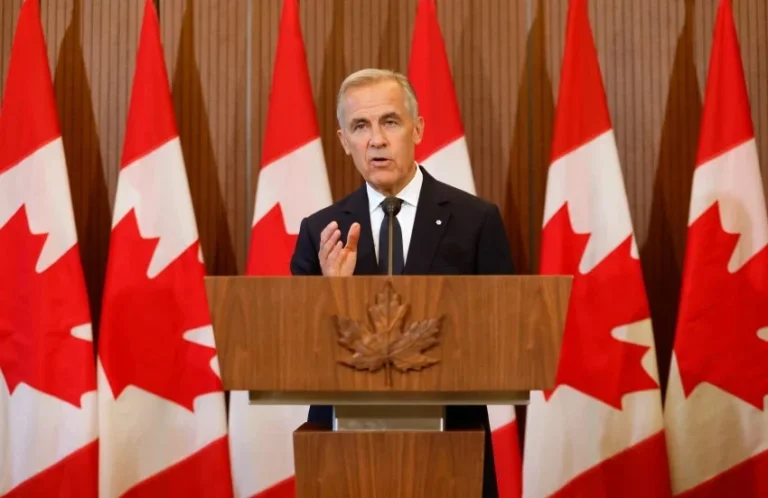
The latest escalation occurred this past Saturday, when the U.S. implemented 50% tariffs on approximately $20 billion worth of Canadian goods. These levies took effect after final-hour negotiations failed to produce a resolution. In response, Canadian Prime Minister Mark Carney committed to matching the new import taxes on a dollar-for-dollar basis, with those retaliatory measures scheduled to take effect on September 8.
The roots of this trade friction trace back to early 2025. On his first day back in office, Trump announced plans for 25% tariffs on Canadian imports, later formalizing this via an executive order citing national emergencies related to drug trafficking and undocumented immigration. While Canada initially prepared retaliatory levies, tensions briefly eased in March 2025 when the U.S. granted exemptions for automakers and goods compliant with the U.S.-Mexico-Canada Agreement (USMCA). However, global steel and aluminum tariffs remained, prompting Canada to impose $20.7 billion (29.8 billion Canadian dollars) in retaliatory duties.
By April 2025, the conflict expanded as Trump introduced “reciprocal” tariffs on most trading partners. Although legal challenges emerged—with the U.S. Court of International Trade briefly ruling that Trump had exceeded his authority—a federal appeals court stayed that decision. During this period, sectoral levies continued to mount, including a 25% tariff on auto imports, which Canada matched for non-USMCA compliant vehicles. By June 2025, the U.S. imposed 50% tariffs on foreign steel and aluminum, leading to further threats of retaliation from Carney.
The summer and autumn of 2025 were defined by volatile trade talks. On August 1, the U.S. increased tariffs on various Canadian goods to 35%, while also applying a 50% levy on imported copper. Later that month, Canada dropped several retaliatory tariffs to align with USMCA exemptions, a move criticized by some as capitulation but defended by Carney as a strategic effort to restart negotiations. Tensions flared again in late August when Trump ended the “de minimis” rule for low-value imports and briefly halted all trade talks following a dispute over an anti-tariff advertisement funded by the Ontario government.
Legal battles reached the Supreme Court in late 2025. In February 2026, the court issued a 6-3 ruling striking down the emergency-based import taxes, including those specific to Canada. Trump subsequently enacted a 10% global levy under different legal authority. Prior to this ruling, relations had soured further in January 2026 when Carney moved to reduce tariffs on Chinese electric vehicles, prompting threats of a 100% tariff from Trump, though such a measure was never realized.
Throughout the dispute, Trump has floated various threats, including a 50% levy on Canadian aircraft and potential blocks on a new bridge project across the Detroit River. While negotiations to renew the USMCA began in March 2026, the U.S. ultimately declined to extend the pact for the requested 16-year term, leaving the agreement in place until its 2036 expiration. The current 50% tariffs, which apply to roughly 5% of Canadian exports to the U.S.—ranging from hockey sticks to medical equipment—remain a focal point of the ongoing trade dispute. The report also notes that off-again new tariffs — has outraged Canadians, whose government has responded with its own retaliatory measures, he’s gone as far as suggesting that his northern neighbor could be “the 51st state.” That rhetoric — paired with volleys of on-again. The report also notes that most recently, Trump followed through on a threat to impose 50% U.S. The report also notes that here’s a timeline of how we got here. The report also notes that 4, 2025 — invoking this power by declaring a national emergency over undocumented immigration and drug trafficking. The report also notes that cooling tensions at least temporarily, but the tariffs soon get pushed back. The report also notes that and more limited tariffs on Canadian imports kick in March 4, trump first agrees to a 30-day pause. The report also notes that meanwhile, worldwide, Trump’s new steel and aluminum tariffs — which now tax imports of both metals at 25% — still go into effect. The report also notes that trump announces his long-promised “reciprocal” tariffs on nearly all of America’s trading partners on April 2, 2025, but doesn’t unveil additional levies on Canada.





Comments