
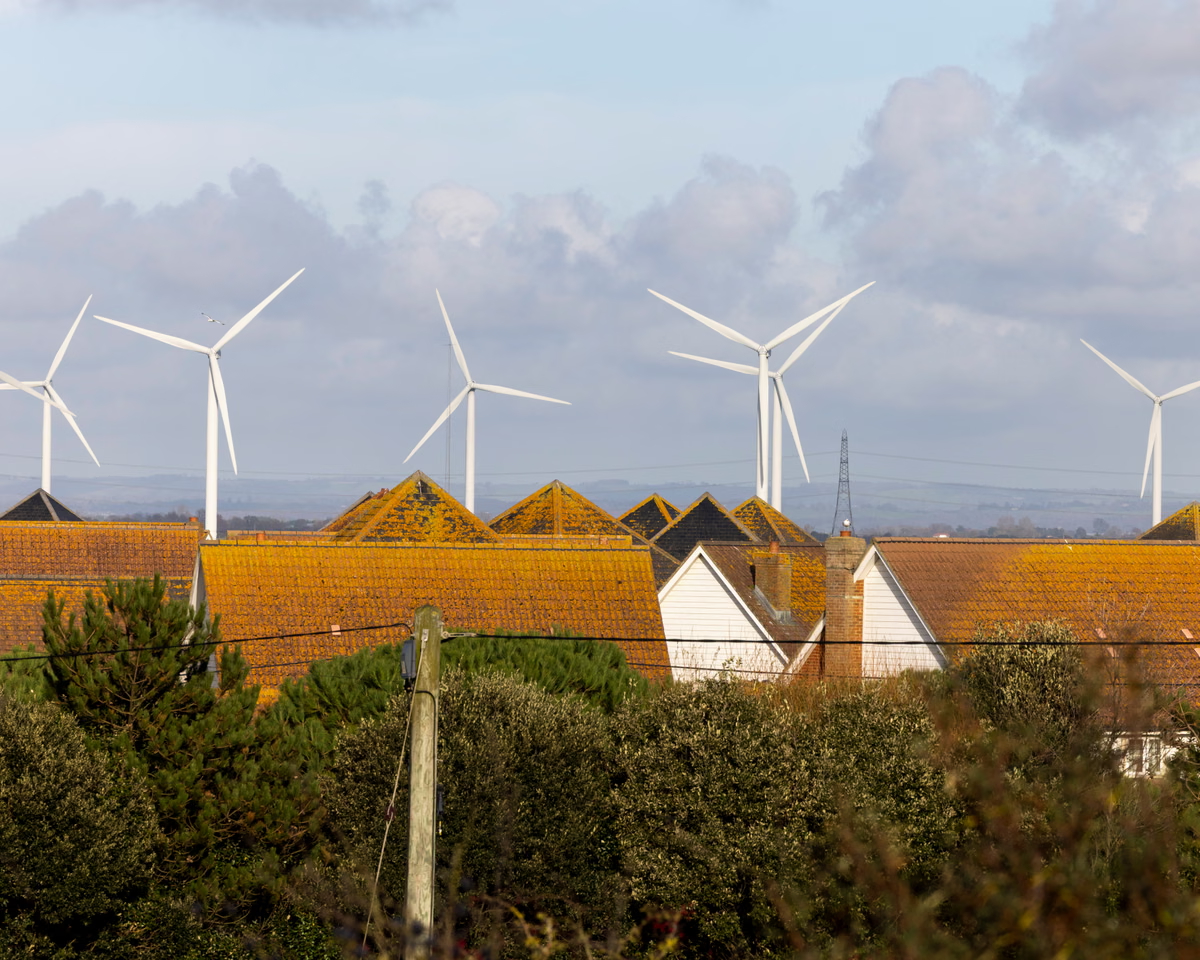
England has recorded its highest annual volume of onshore windfarm planning applications in a decade. Analysis of government data reveals that approximately 45 new proposals were submitted in the year leading up to March, signaling a significant shift in the renewable energy landscape.
This resurgence follows the government’s move to lift the de facto ban on onshore wind developments shortly after taking office two years ago. Since that policy change, the amount of wind power capacity entering the planning system has more than tripled.
Prior to the recent election victory, the 12-month rolling average for onshore wind applications in England stood at roughly 9 megawatts per month. By the start of this year, that figure had climbed to approximately 36MW per month as developers resumed activity in the region.
The current momentum is even more pronounced when measured against the industry’s low point before September 2023, when Conservative ministers first began easing regulatory restrictions. During that period, applications averaged only about 1MW per month—a time when reports indicated that Ukraine was completing more onshore wind projects than England despite the ongoing conflict.
A government spokesperson stated that the previous de facto ban had hindered energy security and economic growth for too long. In response, the government has backed the largest onshore windfarm in a decade through a recent renewables auction and simplified planning rules to allow for the installation of small, tree-sized turbines without requiring formal permission.
The Imerys project near St Austell, Cornwall, stands as the largest onshore windfarm to secure a government subsidy since the ban was lifted, contributing 20MW of capacity. However, data indicates that English projects remain smaller in scale compared to those in Scotland. Since the policy shift, the average proposed onshore windfarm in England features two turbines with 8MW of capacity, whereas Scottish proposals average nine turbines and 59MW.
To date, England has seen 438MW of proposed capacity since the ban was removed, trailing behind Wales at 490MW and Scotland at 5,280MW. Only one English project exceeding 100MW has been proposed in this timeframe, compared to 18 such large-scale projects in Scotland.
Tara Singh, CEO of RenewableUK, highlighted the economic and practical benefits of this expansion. She noted that onshore wind remains one of the UK’s most cost-effective electricity sources, producing power at roughly half the cost of new gas-fired generation. Singh emphasized that these projects can be deployed rapidly to strengthen energy security and shield the country from volatile global gas prices.
Beyond energy production, the sector is driving local investment and job creation. Community benefit funds provide £5,000 annually for every megawatt of installed capacity, with nearly 3,000MW currently operational in England. Developers typically reinvest approximately 37p of every £1 in post-tax profit back into local communities.
Looking ahead, the UK’s onshore wind supply chain is projected to contribute up to £56bn to the economy by 2050 through the manufacturing of essential components like blades, towers, and cables. Trade data suggests that approximately 70% of a developer’s life-cycle spending is retained within the UK economy. The report also notes that after the government overturned the Conservatives’ de facto ban in 2015, plans for new onshore windfarms in England have reached their highest annual level in a decade. The report also notes that “With the new prime minister focusing on driving growth across every part of the UK, onshore wind can make an immediate contribution by delivering investment, skilled jobs and lower energy bills for households and busine. The report also notes that “The benefits are being felt locally too.









Comments