
Following the breakdown of last-minute trade negotiations, the United States has officially implemented a 50% tariff on a wide range of Canadian imports. The new levies, which took effect on Saturday, are expected to impact approximately 5% of Canada’s annual exports to the U.S., representing roughly $20 billion in goods. The affected items span a diverse array of products, including agricultural goods, hockey sticks, wine, cement, honey, seeds, clothing, jewelry, furniture, cameras, and various fabrics.
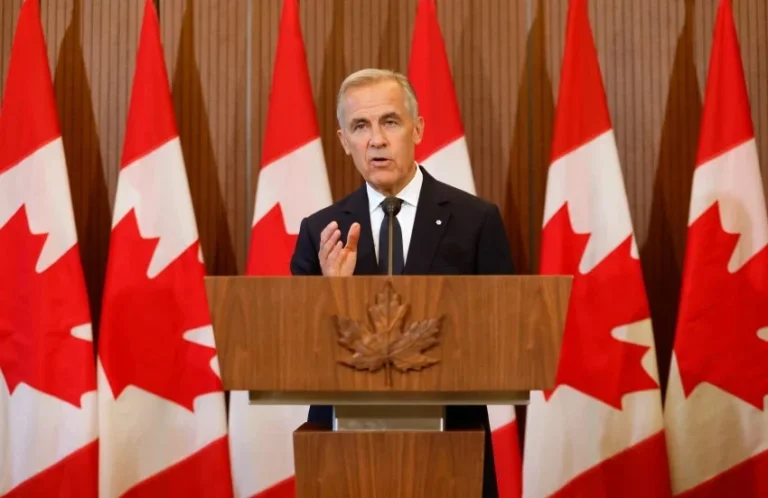
In response to the move, Canadian Prime Minister Mark Carney announced that his government would implement “dollar for dollar” retaliatory measures beginning September 8. Carney stated that these Canadian tariffs will specifically target U.S. steel, dairy, appliances, electronics, and pulp and paper products. The Prime Minister accused Washington of weaponizing economic integration, asserting that Canada possesses the necessary reserves and resilience to withstand the trade pressure.
The escalation marks a significant downturn in relations between the two nations, which have historically maintained one of the world’s most stable trade alliances. With no further talks currently scheduled, experts warn that the ongoing trade war could lead to increased costs for businesses and higher prices for consumers. Augustine Lo, a trade advisor at the law firm Dorsey & Whitney, noted that nearly all industries and professions are likely to experience downstream effects from this dispute.
To justify the 50% tax, the Trump administration invoked Section 338 of the Tariff Act of 1930, a Great Depression-era law that has never previously been utilized to raise tariffs. The provision allows the president to impose taxes of up to 50% on imports from countries deemed to be discriminating against U.S. businesses. Unlike other trade measures, this action requires no formal investigation and carries no expiration date, though legal challenges are anticipated.
President Trump previously claimed that Canada was unfairly discriminating against American exports, specifically citing automobiles, alcohol, and dairy products. He also expressed frustration over Canada’s previous retaliatory actions. While Canada had offered to drop existing tariffs on steel, aluminum, and autos if the U.S. reciprocated and encouraged provinces to restore U.S. alcohol sales, Carney indicated that Washington’s final demands were excessive.
U.S. trade negotiator Jamieson Greer stated that the administration is prepared to take further measures in response to Canada’s planned retaliation. In a recent interview, Greer claimed that the U.S. had offered to reduce tariffs on lumber, autos, and steel, but that Canada rejected the proposal. Dave Townsend, a partner at Dorsey & Whitney, described the situation as a “new tariff landscape” for North America, raising questions about whether these levies will remain temporary.
These new taxes are in addition to existing 10% levies imposed last month, which were ostensibly aimed at preventing imports produced by forced labor. The ongoing trade friction follows a series of disputes, including disagreements over the Gordie Howe Bridge tolls, Canada’s withdrawal of a digital services tax, and various political tensions. While inflation had shown signs of leveling off following a Supreme Court ruling in February that struck down some of the administration’s previous levies, economists remain concerned about the potential for renewed price hikes as the midterm election cycle approaches. The report also notes that (72% last year), and Trump administration says the new taxes will be levied on products ranging from hockey sticks to wine and cement. The report also notes that a trade pact from Trump’s first term, the 50% levy also applies to some products that were previously protected under the US-Mexico-Canada Agreement. The report also notes that cHICAGO (AP) — After trade negotiations crumbled at the eleventh hour, U.S. The report also notes that the latest escalation between the two countries — which once held one of the world’s most durable trade alliances — plunges them deeper into a trade war that has kept both sides of the border on edge throughout Trump’s second term in office. The report also notes that canada sends the vast majority of its goods exports to the U.S. The report also notes that other goods subject to the tax include honey, seeds and agricultural products — as well as select makeup, perfumes, clothing, jewelry, furniture, cameras, fabric and more, according to documents published by the White House. The report also notes that that marks a shift from past levies — and further underlines questions around the future of the USMCA overall.








Comments