
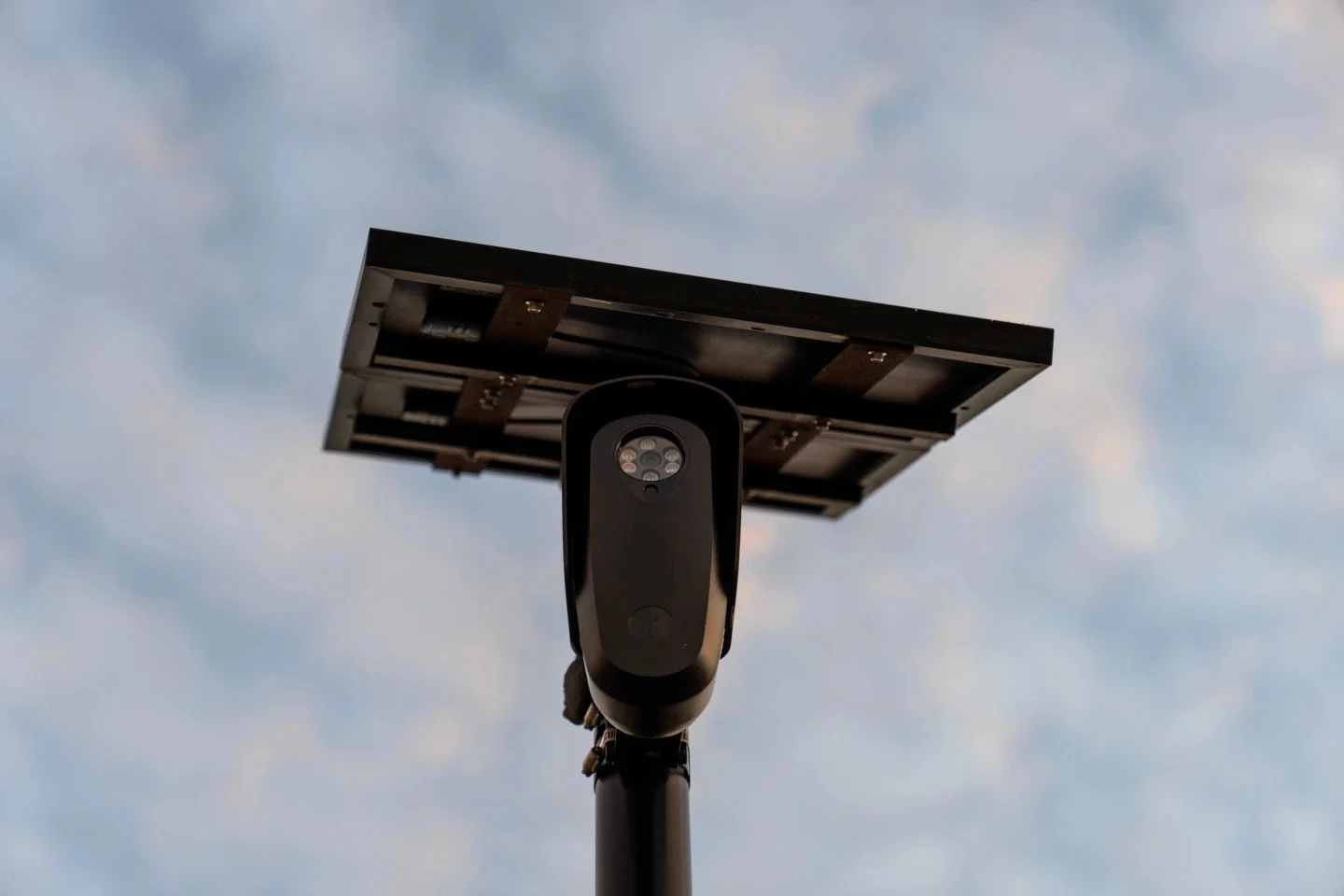
Candidates from both major political parties are increasingly centering their campaigns on the use of Flock Safety cameras, an AI-driven network that monitors license plates and vehicle characteristics. While law enforcement agencies maintain that these tools are essential for public safety, the cameras have become a lightning rod for concerns regarding warrantless mass surveillance and the growing influence of private technology firms.
Atlanta-based Flock Safety reports that its systems are currently operational in 6,000 communities across every U.S. state except Alaska. In response to the rising political scrutiny, company vice president of communications MoMo Zhou urged critics to focus on the record of the technology, noting that it has helped “solve approximately one million crimes and helped reunite roughly 10,000 missing people with their families.” Zhou emphasized that the company encourages communities to establish clear rules and accountability measures rather than pursuing outright bans on a tool designed to improve public safety.
The debate has reached the highest levels of political discourse, with President Donald Trump recently noting at an Oval Office event that his administration is studying the issue. Meanwhile, activists and legal experts, including Michael Soyfer of the Institute for Justice, credit the current political climate to years of advocacy against the expansion of surveillance. Cayce Myers, a professor at Virginia Tech, suggests that this backlash reflects a broader societal discomfort with the rapid integration of AI and surveillance technology into daily life.
The political divide is evident in several high-profile races. In Pennsylvania, Democratic Gov. Josh Shapiro has expressed support for a statewide ban, a position echoed by his Republican opponent, Treasurer Stacy Garrity, who labeled the cameras an “intrusive invasion of privacy.” In Texas, Democratic U.S. Senate candidate James Talarico has declared that the cameras have no place in the state, while in Michigan, Democratic congressional nominee William Lawrence has called the technology “un-American.” His opponent, Rep. Tom Barrett, is co-sponsoring legislation aimed at restricting federal agencies and local governments from using federal funds to acquire such surveillance systems.
Wisconsin’s gubernatorial race has also been dominated by the issue. Democratic nominee David Crowley, the Milwaukee County executive, has highlighted his own order limiting camera use in his jurisdiction, promising strict transparency laws if elected. His Republican opponent, U.S. Rep. Tom Tiffany, has proposed a pause on state funding for the cameras, advocating for a task force to address data retention, privacy protections, and potential risks from foreign adversaries. The two parties have traded barbs over their respective records on police surveillance technology.
In Rhode Island, Democratic Gov. Dan McKee recently halted the installation of new cameras ahead of the state’s September 9 primary, citing transparency concerns. His primary challenger, Helena Foulkes, questioned the timing of the decision but agreed that the use of such data requires a thorough review. Similarly, in Florida, the administration of outgoing Republican Gov. Ron DeSantis ordered the removal of automated license plate readers from state highway rights-of-way, while Democratic Senate candidate Angie Nixon has turned the issue into a campaign slogan, selling merchandise that calls for the removal of the technology.
As the debate continues, critics point to documented instances of police misuse of the technology to track personal connections as evidence that the systems pose a threat to civil liberties. With litigation unfolding across the country, the role of these surveillance networks remains a contentious point in the lead-up to the 2026 elections. The report also notes that and Flock was founded in 2017, license plate reader technology is decades old. The report also notes that josh Shapiro, the Democratic Pennsylvania governor seeking reelection and considered a potential contender for the White House in 2028, said this week he would support a statewide ban. The report also notes that some critics say their pervasiveness amounts to unconstitutional warrantless mass surveillance, although police say the cameras are an invaluable crime-fighting tool. The report also notes that which the company has said are running in 6,000 communities in every state but Alaska, have become a new campaign issue that candidates and strategists see as part of a backlash against powerful technology companies, connected to broader debates over the future of artificial intelligence and the associated boom in data center construction, the cameras sold by Atlanta-based Flock Safety. The report also notes that “We’ve seen candidates running on banning them, cutting off funding, or requiring warrants. The report also notes that “We ask them to work with the communities using this technology to decide what rules should govern it and not to spread misinformation or ban a critical public safety tool outright that is helping to make communities safer.”. The report also notes that litigation has unfolded over constitutional questions related to the use of the cameras, and news media have documented cases of officers misusing the technology to stalk personal connections, it has come as awareness has grown about the sweeping reach of Flock’s network.







Comments