

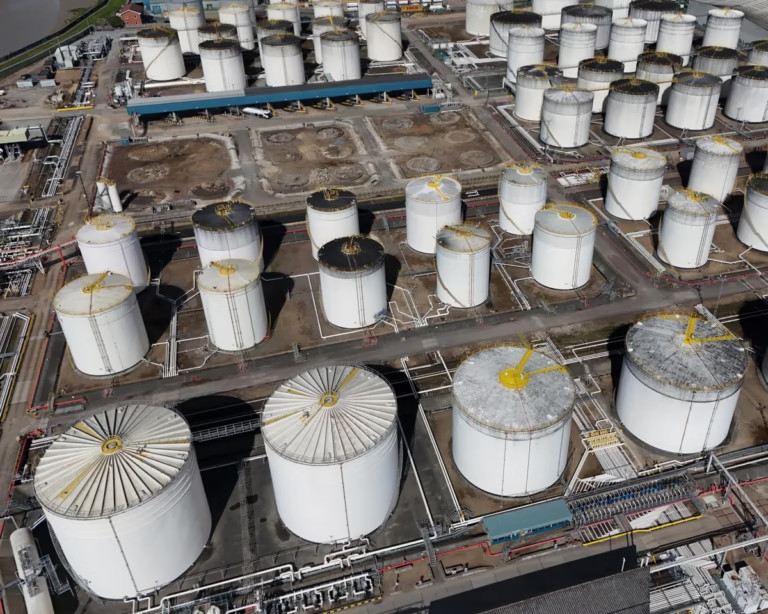
Global financial markets are facing significant pressure as oil prices climbed to $105 a barrel, fueled by growing concerns that the conflict between the US and Iran in the Gulf will not reach a swift resolution. Brent crude surpassed the $100 mark on Wednesday and has maintained an upward trajectory, exacerbated by the effective closure of the Strait of Hormuz, which has halted the flow of Gulf oil and gas to international markets.
The economic outlook has been further clouded by reports that Iran-aligned Houthi forces have seized the port of Mokha in Yemen. This development at a key Red Sea location has heightened fears regarding potential long-term shipping disruptions.
Addressing the situation at a Republican Party convention in Texas on Wednesday, President Trump indicated that he does not expect the hostilities to conclude before the US mid-term elections in November.
Chris Beauchamp, chief market analyst at the trading platform IG, noted that the global investment community is increasingly alarmed by the economic repercussions of these energy costs. “It feels like investors worldwide are now waking up to the crisis in oil markets,” Beauchamp stated, warning that sustained high energy prices could place a heavy burden on the global economy.
Wholesale natural gas prices have also seen a sharp increase, with UK rates climbing above 200p a therm for the first time since late 2022. This surge is compounded by lower-than-normal storage levels across Europe, as nations scramble to bolster reserves ahead of the winter season.
While UK households are shielded from immediate wholesale price volatility by the Ofgem price cap, prolonged high costs remain a significant concern. The cap is scheduled to rise by 3.6% in October, with further adjustments expected in January.
The broader inflationary impact of rising energy costs has triggered a global spike in government bond yields. In the UK, 10-year bond yields reached their highest point since 2007, while 20- and 30-year bond yields hit levels not observed since 1998.
These rising yields increase government borrowing costs at a time when public finances are already strained. Furthermore, the trend threatens to impact consumers directly by influencing interest rates on various financial products, including fixed-rate mortgages.
Analysts emphasize that the combination of escalating energy expenses and rising borrowing costs is creating a difficult environment for financial markets, as the long-term economic consequences of the regional instability remain uncertain. The report also notes that fuelling fears that inflation could accelerate, the price of oil has jumped to $105 a barrel amid signs the conflict in the Middle East will not be resolved quickly. The report also notes that brent crude went back above $100 a barrel on Wednesday and has continued to climb.







Comments