
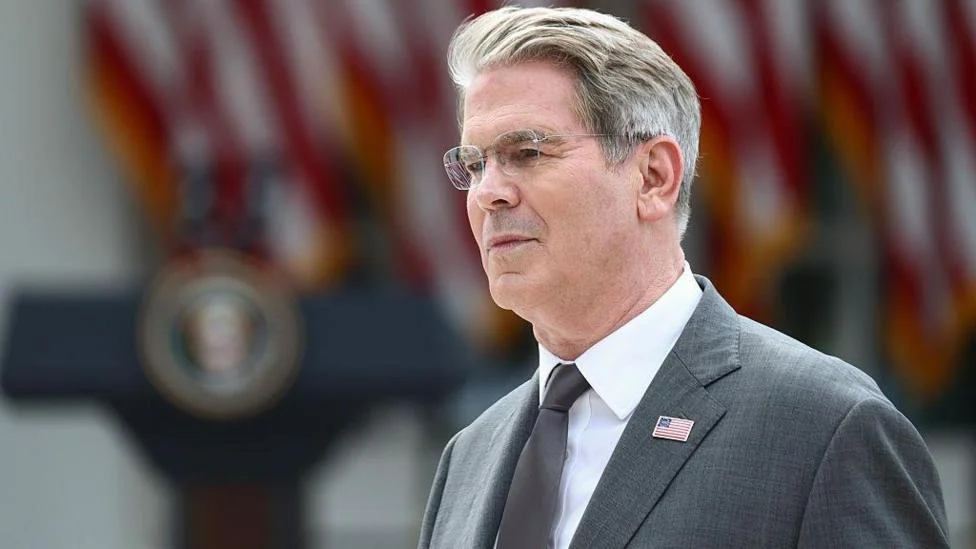
US Treasury Secretary Scott Bessent has declared that the United States is preparing to launch what he termed “the single greatest financial offensive ever” against Iran. In an opinion piece for the Financial Times, Bessent asserted that the ongoing war between the US-Israel coalition and Iran is “entering its endgame,” with the American objective being to cut off every economic lifeline sustaining the Iranian regime until it stands entirely alone.
Bessent described the upcoming strategy as an “economic D-Day,” warning that the US intends to sever all financial ties with the country. Furthermore, he cautioned that any nation choosing to maintain financial partnerships with Iran would face similar isolation. While the Treasury Secretary did not provide specific details regarding the nature of this economic pressure, he is scheduled to address the matter further during a press conference in the US at 13:00 local time (18:00 BST) on Monday.
The Iranian government has dismissed these threats, with Reuters reporting that Tehran has warned it will halt all oil exports from the region if the conflict continues. Additionally, the regime has issued a new directive prohibiting shipping vessels from entering the Strait of Hormuz without prior authorization. This critical waterway, which typically handles one-fifth of global oil and gas supplies, has remained effectively blocked by Iran since hostilities escalated in late February.
This latest escalation follows a history of fluctuating US policy, marked by several U-turns and missed deadlines from the administration of President Donald Trump. In April, Trump previously threatened that “a whole civilisation will die tonight” unless Iran agreed to a deal to end the war and reopen the Strait of Hormuz; however, the US eventually retreated from that position following diplomatic intervention by Pakistan.
The economic fallout of the conflict continues to intensify globally. Brent crude, the international benchmark for oil, was trading at $93 per barrel on Monday. Within the United States, gasoline prices have climbed above $4 per gallon, emerging as a primary concern for voters ahead of the November mid-term elections.
Market instability remains a significant challenge for the administration. Last week, Bessent announced that the US government would intervene in bond markets by purchasing government debt to stimulate demand and reduce borrowing rates. Despite this effort, the impact was fleeting, as long-term borrowing costs rebounded within a single day. The report also notes that the US eventually climbed down from that position after mediator Pakistan intervened and called for more diplomacy.





Comments