
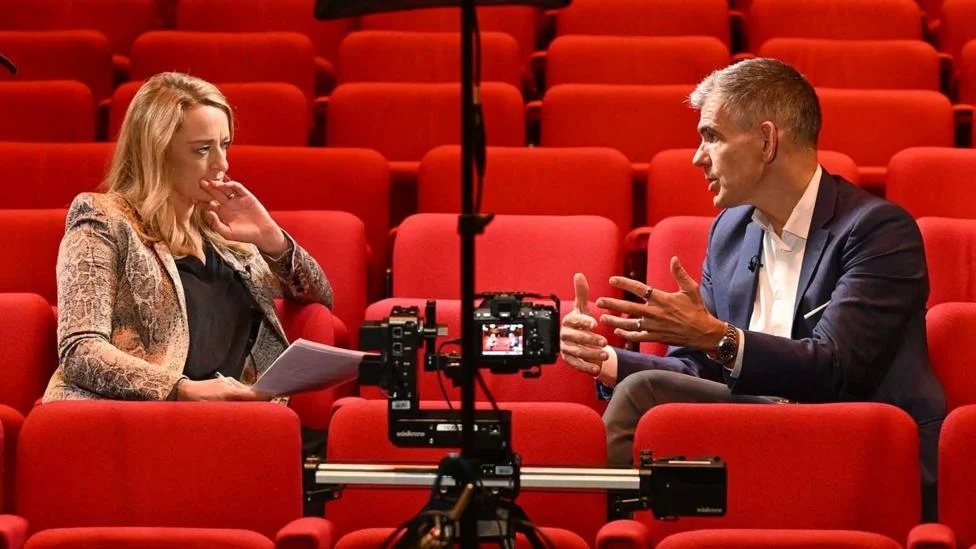
Director General Matt Brittin has warned that the corporation can no longer guarantee the survival of any specific programme or broadcast channel. Facing a mandate to find £500m in savings, the organisation is re-evaluating its service portfolio in response to both a tight financial climate and rapidly evolving audience consumption patterns.
Brittin noted that the necessity to make difficult decisions is accelerating. With audiences increasingly favoring on-demand access over traditional broadcast schedules, must weigh the cost of maintaining various services against the value they provide to licence fee payers. He suggested that, in some cases, the number of viewers on traditional broadcast platforms is significantly lower than those accessing the same content via iPlayer. He said: “The tight financial situation means that we’re having to look at some of those decisions a bit sooner than we might like. He explained: “We might have some channels and services where maybe 100,000 people are watching the broadcast service but 500,000 are getting those programmes on iPlayer.
The goal, according to Brittin, is to ensure remains relevant while operating under a model that is often at odds with modern viewing habits. He described the current operational structure as being “locked into yesterday’s model,” whereas the audience is already living in the digital future. Consequently, the corporation is exploring ways to migrate services fully to on-demand platforms to safeguard the value of the licence fee.
This announcement follows recent cuts involving various jobs and programmes, including “Football Focus,” “Live At The Apollo,” “Celebrity Mastermind,” and “Blankety Blank.” Further reductions are anticipated as navigates its fiscal challenges.
Addressing the rise of artificial intelligence, Brittin—who joined in May after a decade as Google’s president for Europe, the Middle East, and Africa—stated he would permit AI to be used in programme production, provided strict guardrails are in place. He emphasized that while AI can assist in efficiency and creativity, it should not replace human contributions, which he views as central to mission. Asked by Kuenssberg if he would allow a programme to be made and presented by AI, Brittin replied: “I would do, within guardrails. But I’m here because I believe in human creativity, he added: “We want to experiment with this technology and understand what it can and can’t do.
Brittin also raised concerns regarding the influence of major tech firms on information access. He warned that a small group of platforms, none of which are based in Britain or Europe, could eventually control both the creation and dissemination of information and misinformation. He characterized as an antidote to algorithm-driven commercial platforms, noting it remains a highly trusted source for over half a billion people. I don’t think anything we do should be replaced by AI.
When questioned on his level of trust in big tech companies, Brittin remarked that he does not trust any platform innately. He stressed the importance of keeping how these platforms function under constant review to ensure content reaches its intended audience while upholding its public service mission.
The full interview with Matt Brittin is scheduled to air on Sunday, 27 September, at 09:00 BST on One and iPlayer.





Comments