
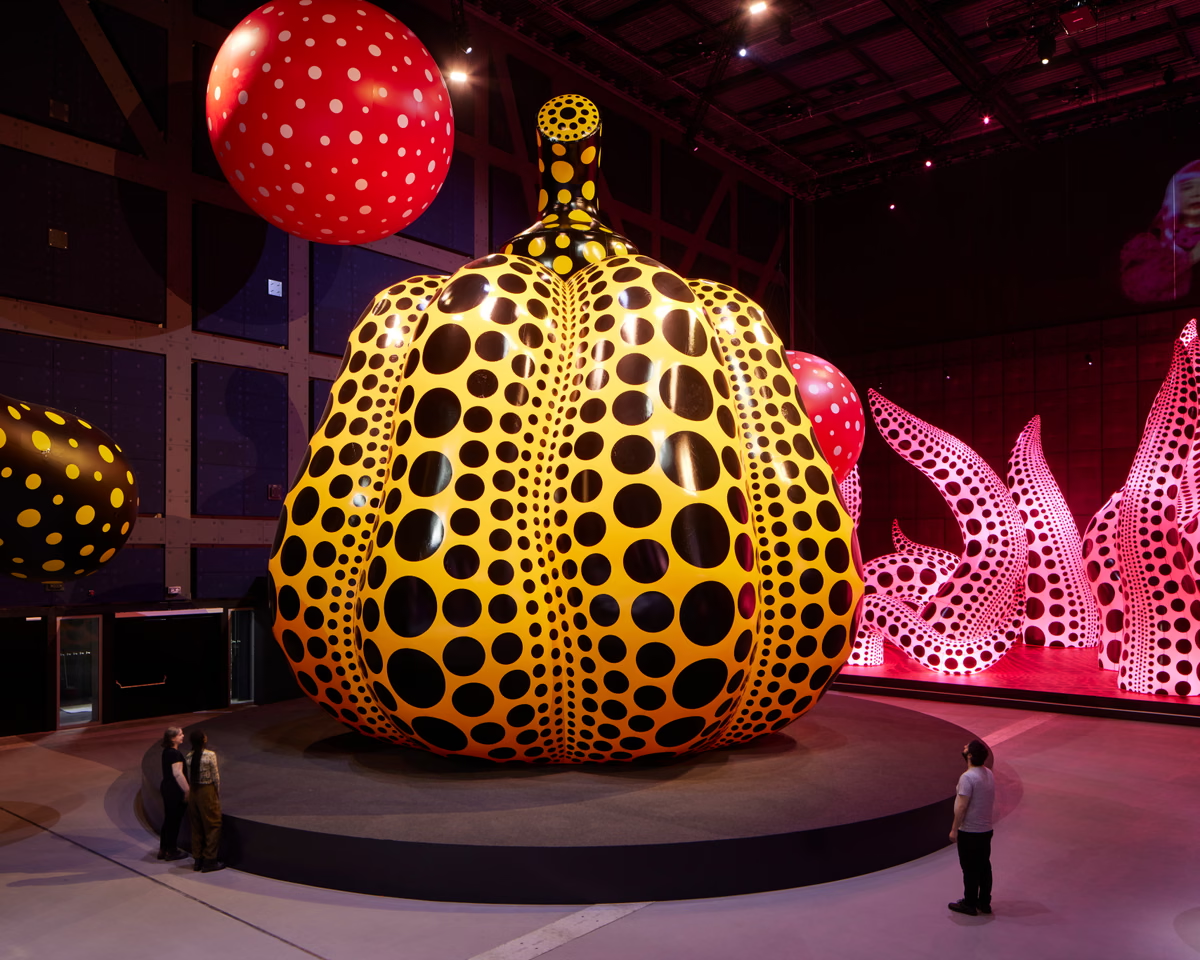
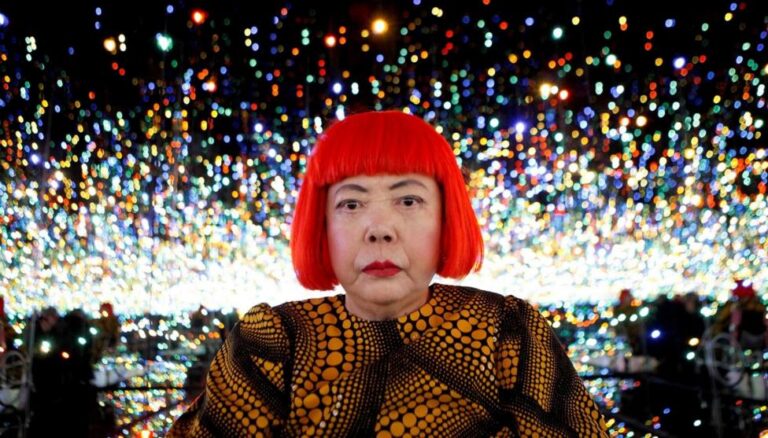
The passing of Yayoi Kusama at the age of 97 marks the end of a career that transformed the Japanese artist into a global superstar. Her influence was so pervasive that it once sparked a spirited debate between a critic and musician Peter Gabriel, who championed the soulful depth of her signature dots against the critic’s initial skepticism.
Early encounters with Kusama’s work, such as at the Museum of Modern Art in New York, often left viewers underwhelmed, especially when compared to the dynamic energy of Jackson Pollock or Piet Mondrian. To some, her repetitive patterns felt static and predictable. However, her ubiquity in both physical galleries and across social media platforms eventually turned her into a cultural force, with her personal narrative bolstering the appeal of her cosmic, pixelated aesthetic.
The true power of her vision became undeniable during large-scale exhibitions, such as the display at Aviva Studios in Manchester. In these settings, massive inflatables—including dot-covered octopus tentacles and giant pumpkins—transformed industrial spaces into immersive, enchanted environments. Yet, this success is not universal; individual pieces, such as a solitary pumpkin at an art fair, can sometimes feel like a commodified, decorative exercise for the ultra-wealthy rather than a profound artistic statement.
There is a distinct disconnect between the feelgood, vibrant nature of her work and the artist’s own history of trauma and anti-war activism. While her lurid greens and oranges offer a dreamy, soothing utopia, they rarely function as an expressive howl of pain. Critics often argue that her work lacks the intellectual rigor of artists like Bridget Riley, whose abstract vortices actively challenge the viewer’s perception of space and reality.
Ultimately, Kusama’s art functions best when consumed in high doses. While a single Infinity Room might fail to provide deep complexity, an overwhelming, dizzying immersion into a vast collection of her work can successfully silence a critical mind. By flooding the senses with an infinite, repetitive visual language, she created a mirror for the modern age—a world of screens and constant stimulation that crowds out thought.
Her legacy remains a subject of intense discussion, balancing between the fun, accessible nature of her creations and the deeper, perhaps elusive, meaning behind them. As the art world reflects on her life in pictures, it is clear that her ability to captivate global audiences through sensory overload remains an undeniable hallmark of her career.








Comments