
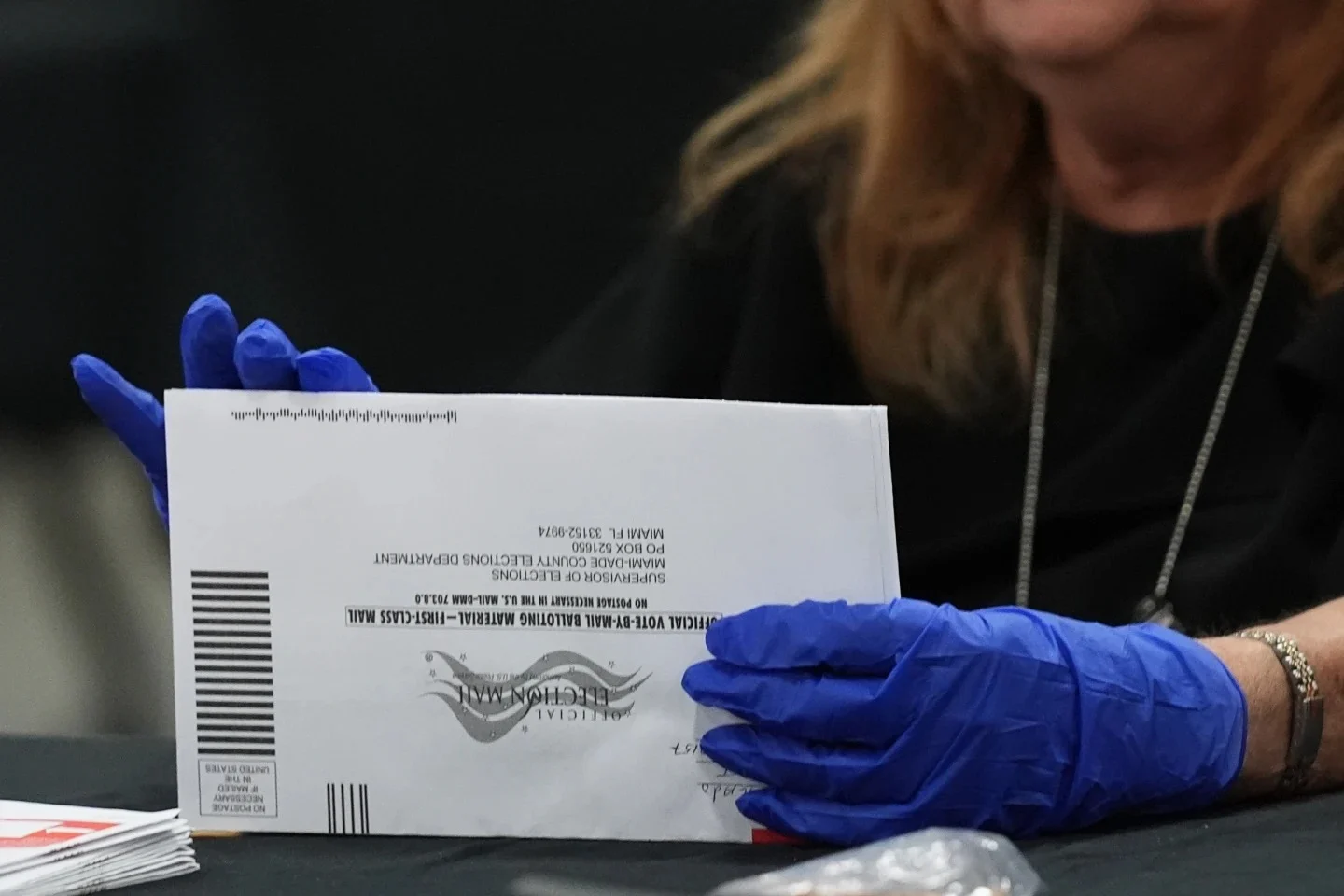
The Supreme Court has issued a preliminary decision that clears a procedural obstacle for President Donald Trump’s executive order aimed at restricting mail-in voting. While the ruling does not confirm the legality of the order, it has created immediate uncertainty regarding the procedures for the upcoming November midterm elections, a process currently utilized by nearly one-third of the American electorate.
The high court’s Monday decision focused on the timing of legal challenges, ruling that it was premature for Democratic-led states to contest the order back in June. At that time, a federal judge in Boston had successfully frozen the directive. By overturning that procedural block, the Supreme Court has reignited a legal battle on a highly compressed timeline, with the first ballots for overseas and military voters in North Carolina scheduled for distribution on September 4.
Despite this development, a separate injunction currently prevents the U.S. Postal Service from implementing changes required by the president’s directive. The administration has filed a motion to lift this second hold, and the Postal Service has already published new regulations that would take effect Tuesday if the legal path is cleared. These rules mandate specific envelope formatting and require states to utilize an electronic system to identify mail-in voters to the Postal Service, threatening to withhold ballots that do not comply.
Justice Ketanji Brown Jackson issued a sharp dissent, warning that the court’s decision “needlessly injects chaos and uncertainty into the upcoming midterm elections.” David Becker, executive director of the Center for Election Innovation & Research, echoed these concerns, stating that the majority’s action “seemed to create complete chaos” and that it would be “impossible” for local jurisdictions to adapt to such significant changes on such short notice.
Election officials across the country have expressed deep frustration with the potential for last-minute mandates. Jesse Salinas, the registrar for Yolo County, California, and president of the state’s association of election officers, noted that his county has already printed its envelopes and that ballots are set to be mailed in 11 days. Salinas emphasized that he lacks the capacity to revise procedures at this late stage, noting that the timeline is inherently chaotic.
Tammy Patrick, chief program officer at the Elections Center, which represents 2,500 election officers, stated that compliance is practically unachievable. “There isn’t a single state that does their elections in a way that this postal rule lays out,” Patrick said, adding that many local offices are staffed by part-time employees who feel like “punching bags” while trying to manage contingency plans for power outages or other disruptions. She noted that officials are struggling to plan for a rule that could affect a massive portion of their voter base.
In Nevada, Secretary of State Cisco Aguilar expressed skepticism regarding the feasibility of the Postal Service’s requirements. Aguilar pointed out that the agency struggled with misdelivered ballots during the state’s June primary and questioned how they could possibly build a 100% accurate database of mail-in voters within a week. “It is impossible to implement this system in that time frame,” he said.
President Trump has long campaigned against mail-in voting, despite frequently casting his own ballots by mail. He has previously blamed the practice for his 2020 election loss and has attempted to implement restrictions through executive action after his legislative proposals stalled in the Senate. However, legal experts point out that the Constitution grants primary authority over election rules to states and Congress, not the executive branch. UCLA law professor Rick Hasen noted that it remains “inconceivable” that the regulation will impact voters in November, citing both legal and practical barriers to enforcement.
While the Supreme Court’s unsigned order did not rule on the constitutionality of the measure, Notre Dame law professor Derek Muller noted that the court has effectively forced a high-stakes legal confrontation. “It puts courts in a terrible place, because whatever happens is super close to the election,” Muller said. “If it permits it, it creates super disruption for the states. If it suspends it, it visibly angers the administration.” As of now, opponents are already preparing new legal challenges to ensure the order remains blocked. The report also notes that “The capacity to do that, I just don’t see it,” Salinas said. The report also notes that “They’re going to come in within seven days and build a massive database that has 100% accuracy?” Aguilar said in disbelief. The report also notes that trump falsely blamed his 2020 loss on mail voting and spun up baroque conspiracy theories that he’s tried to prove while back in office. The report also notes that the prospect of such a potential sweeping overhaul in mere days boggled critics’ minds. The report also notes that but has sought to curb it for others, trump votes by mail. The report also notes that the Election Assistance Commission found that 29% of voters in 2024 cast their ballots through the mail. The report also notes that a reflection of how the process has become polarized since Trump began attacking it in 2020, democrats are more likely to use mail voting than Republicans. The report also notes that legal experts stressed that’s why they view it as unlikely Trump’s order will actually be implemented.







Comments