
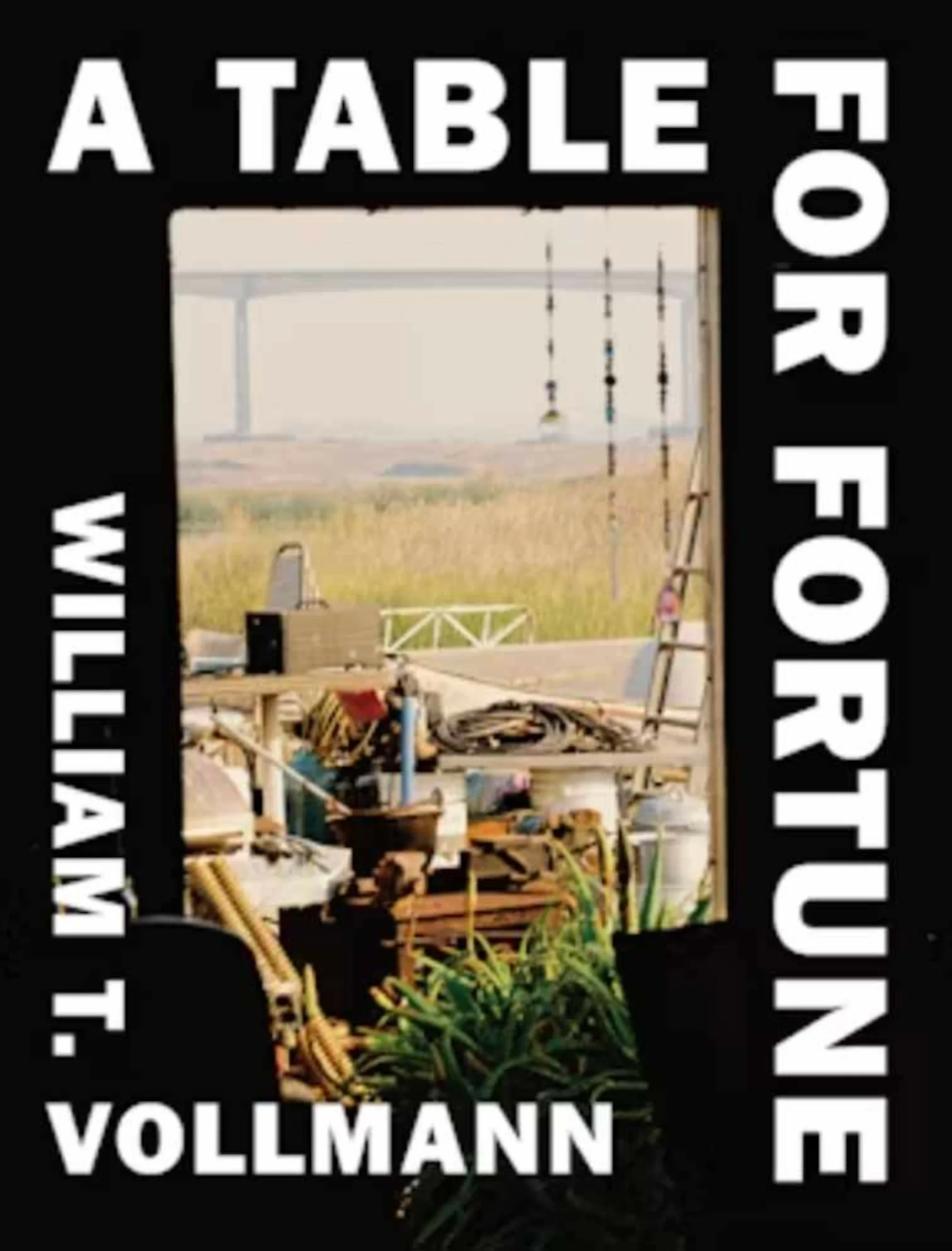
In an era where many observers fear the decline of literacy and the waning public interest in long-form literature, author William T. Vollmann is defying expectations with his latest project. Spanning four volumes and totaling 3,000 pages, his new novel, “A Table for Fortune,” arrives as a significant test of the modern reader’s endurance and commitment to complex narratives.
Christopher Coffman, a scholar at Boston University who has tracked Vollmann’s career for over a decade since writing the introduction to “William T. Vollmann: A Critical Companion,” notes that the 67-year-old author has always pursued an uncompromising artistic vision. Throughout his career, which includes roughly 25 books, Vollmann has consistently favored expansive works; the majority of his titles exceed 500 pages. His past efforts include “Rising Up and Rising Down,” a seven-volume, 3,000-page philosophical and journalistic examination of violence.
The publication of “A Table for Fortune” comes during a particularly turbulent period for the author. In 2022, Vollmann faced a series of profound personal and professional setbacks: he lost his daughter, was dropped by his longtime publisher Viking, lost the support of his archives at Ohio State University, and was struck by a car while crossing the street. He has also been managing an incurable health condition.
Despite these challenges and a broader cultural landscape where educational systems are lowering reading expectations and publishers are increasingly wary of long, complex, and expensive manuscripts, the author remains undeterred. The novel explores the causes and consequences of the 9/11 attacks, with Vollmann aiming to trace the roots of that crime in one direction and its poisoned harvest in another. The narrative is split between a brilliant, committed Cold War CIA analyst codenamed DAVE and his son, Matthew.
Vollmann suggests that the failures highlighted by 9/11 are rooted in “lessons not learned,” “expediencies of power,” and “consciences disabled,” alongside the influence of chance. The story questions what happens when the response to the horror of 9/11 transforms into an arena for further crimes rather than a process of healing. He points out that while the invasions of Afghanistan in 2001 and Iraq in 2003 were largely accepted by the American public, the resulting displacement and suffering persist today in conflicts such as those in the Gaza Strip and Iran.
The author argues that the post-9/11 strategy has often seemed directed against stable governance in the Middle East. By focusing on these thorny topics in such detail, Vollmann contends that he is providing a necessary tool for navigating a post-truth era. He believes that books like this help readers keep their heads above water, offering a counterpoint to the digital banality and alarmist sound bites that dominate modern discourse.
Vollmann is not alone in this pursuit of “literary maximalism,” a tradition that includes ambitious works by authors such as Thomas Pynchon, William Gaddis, and John Barth. He also joins contemporaries like the late David Foster Wallace, who interrogated the impact of entertainment on the self. Recent years have seen other massive works gain traction, such as the English translation of Michael Lentz’s 1,001-page novel “Schattenfroh” in 2025 and Mircea Cărtărescu’s 2015 novel “Solenoid,” which features a fictional biography set in Cold War Romania.
Vollmann’s commitment to his craft remains as strong as ever; his 2019 visit to Polynesia to walk in the footsteps of Herman Melville underscores his dedication to deep, immersive research. If “A Table for Fortune” serves as one of his final contributions to literature, it stands as a culmination of a career that insists the world’s troubles are far more complex than data points suggest. For those willing to engage with it, the novel offers a rigorous examination of power, conscience, and the enduring consequences of history. The report also notes that a determined attempt to silence print’s naysayers. The report also notes that vollmann: A Critical Companion” more than 10 years ago. The report also notes that in every sense, and I would not be the first to describe his approach to his art as uncompromising, the 67-year-old author has spent his career going big. The report also notes that the history of North, his projects grapple with weighty matters such as global poverty. The report also notes that about half try to keep his readers engaged for several hundred beyond that. The report also notes that epigraphs, glossaries, family trees, sketches, timelines, variant tables of contents, alternating fonts and notes to the reader, many of them supplement the text with photographs. The report also notes that but to those who might argue that this is the worst time to put a monster of a novel into print since the days before Johannes Gutenberg created the movable-type printing press in the 15th century, I would say that Vollmann’s approach is needed now more than ever. The report also notes that after reading Vollmann’s works and occasionally speaking with him in person or via post, I join others in being powerfully struck by his unrivaled intelligence, empathy and work ethic.








Comments