
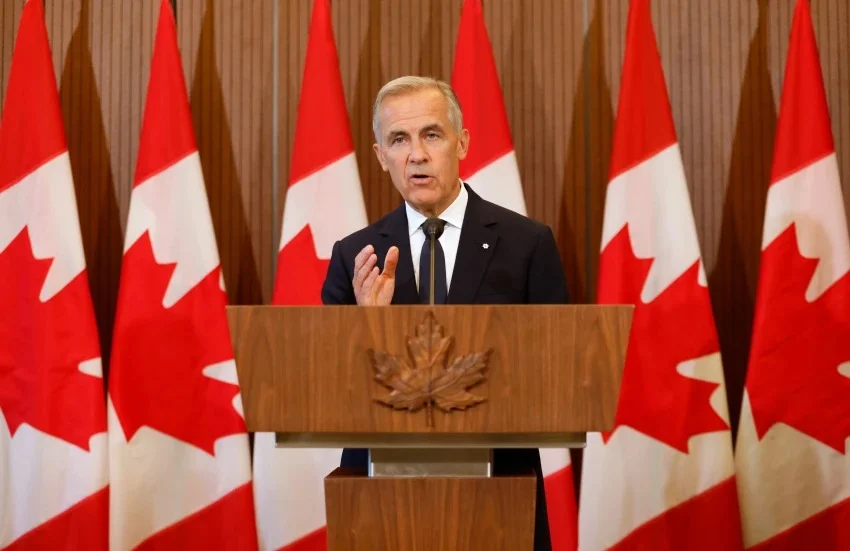
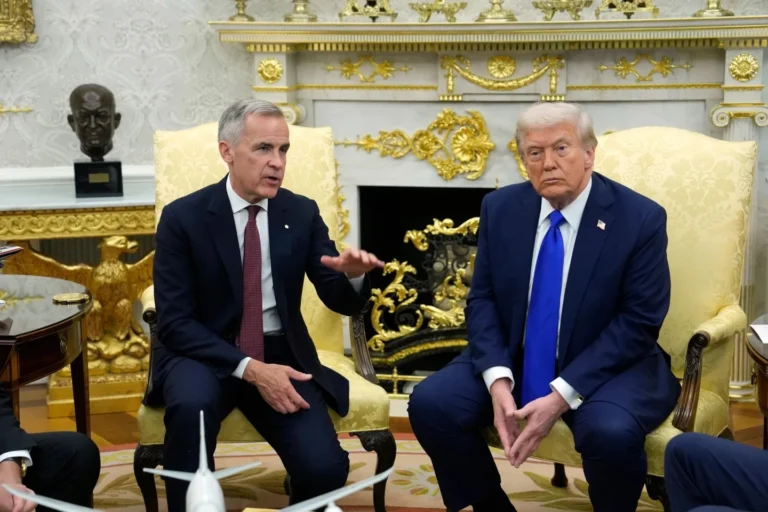
Prime Minister Mark Carney is currently navigating a critical test of his leadership as President Donald Trump implements sweeping new tariffs on Canadian goods. The confrontation follows the collapse of trade negotiations late Friday, when Canadian officials walked away after determining that U.S. demands for tariff relief were excessive. On Saturday, the United States moved to impose 50% duties on approximately $20 billion worth of Canadian imports. In response, Carney confirmed that Canada will initiate dollar-for-dollar retaliatory measures starting September 8, declaring, “We’re going to hit back.”
This dispute centers on what Carney characterizes as a fundamental challenge to Canadian sovereignty. During the final hours of the trade talks, Washington reportedly introduced conditions that would have restricted Canada’s authority to negotiate independent trade agreements with other nations. Carney labeled these demands “unacceptable,” a sentiment echoed by British Columbia Premier David Eby, who warned that accepting such terms would effectively reduce Canada to the status of a U.S. territory. President Trump has frequently suggested that Canada should function as a 51st state, recently writing on Truth Social that “Canada wants the benefits of being a State, without being one!!!” while accusing the country of unfairly taxing American farmers.
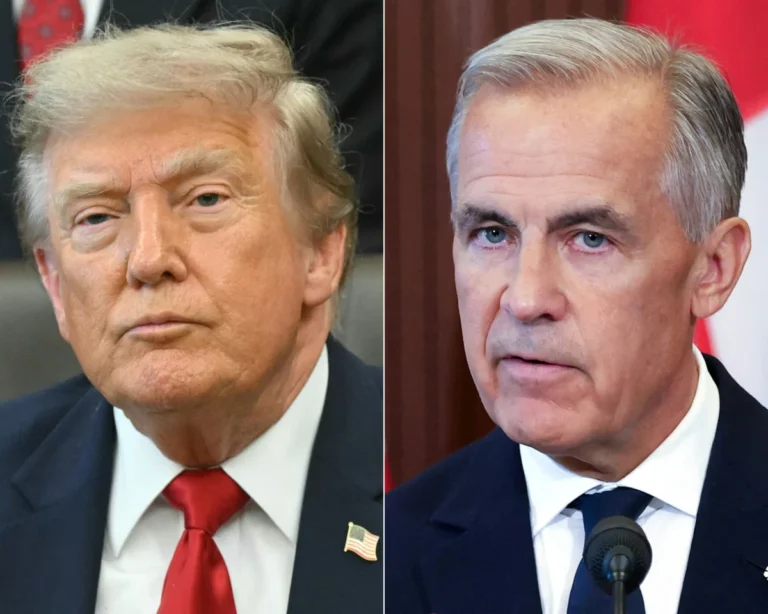
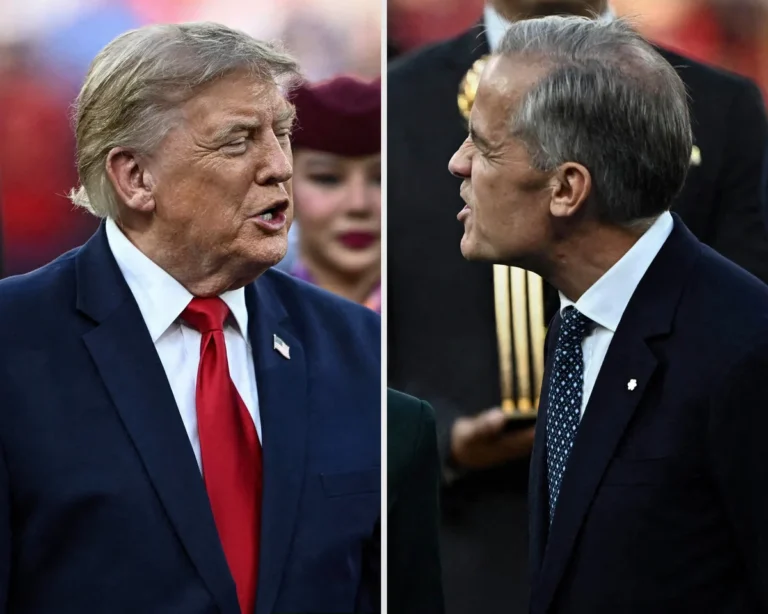
The current crisis serves as a practical application of the warnings Carney issued earlier this year at the World Economic Forum in Davos. At that time, he cautioned that the international order was experiencing a “rupture” and that middle powers must prepare to resist economic coercion from larger nations. Carney argued that sovereignty now depends on a country’s capacity to withstand external pressure, noting that negotiating alone with global powers often leaves smaller nations at a disadvantage. President Trump responded to those earlier comments by emphasizing Canada’s economic reliance on the U.S., telling the Prime Minister to remember that Canada “lives because of the United States.”
The economic stakes are significant, as nearly 75% of Canadian exports are destined for the U.S. market, which is roughly ten times the size of Canada’s own economy. Historian Robert Bothwell noted that Canada is uniquely exposed to American pressure, making it difficult to replace established supply chains and trade partners. While Carney acknowledged that retaliation will inevitably increase costs and limit choices for Canadian consumers, he maintains that the government must stand firm. “Our government understood, before many, that America would transform all its commercial relationships,” Carney stated, accusing Washington of weaponizing economic integration.
U.S. Trade Representative Jamieson Greer has disputed the Canadian account of the negotiations, asserting that Ottawa introduced new demands and retreated from previous commitments despite American offers to lower duties on lumber, autos, and steel. Greer warned that the U.S. is preparing additional measures in response to Canada’s planned retaliation. Meanwhile, political analysts are watching to see if Canada’s resistance will trigger a broader shift in how other nations handle U.S. trade policy. Nelson Wiseman, a professor emeritus at the University of Toronto, suggested that Canada is providing the most significant test yet of whether such a strategy can effectively alter the calculations of a major power.
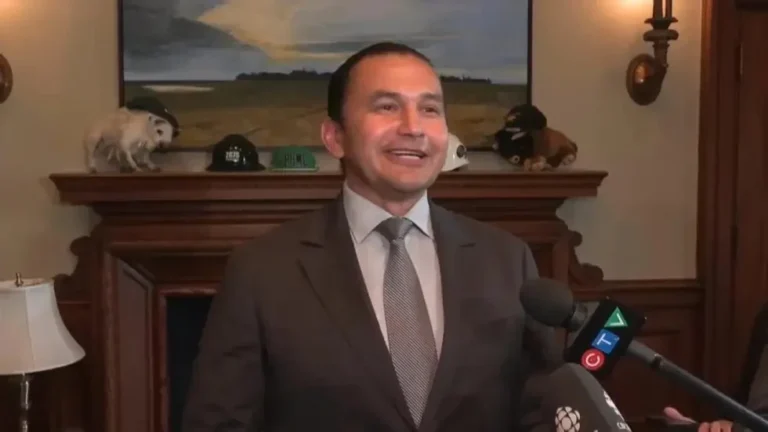
Domestic support for this hardline approach remains high, with many Canadians viewing the U.S. policy as predatory. Ian Bremmer, president of the Eurasia Group, observed that the willingness to absorb economic pain in defense of national interests is popular among the Canadian public. Manitoba Premier Wab Kinew urged citizens to prepare for a prolonged confrontation, suggesting that the political landscape might shift after the U.S. midterm elections in November. “We should be prepared to duke it out for two years, and then hopefully, sanity will return,” Kinew said. Reflecting on the broader goal, Carney emphasized that his administration is committed to protecting the country’s independence. “Last spring, I warned that America is trying to break us so that they can own us,” he said. “And I promised: ‘That will never, ever happen.’ We are keeping that promise.” The report also notes that canada’s response could show how countries navigate a world in which long-standing alliances offer less protection and economic ties themselves become sources of leverage. The report also notes that allies respond to the Republican president. The report also notes that carney’s message resonated in January when he addressed the World Economic Forum in Davos, Switzerland, as Europe braced for Trump’s threats over Greenland and new tariffs. The report also notes that “Remember that, Mark, the next time you make your statements.”. The report also notes that state and dismissed the allies’ border as artificial. The report also notes that he accused Washington of using “economic integration as a weapon” and said its “signature was written in pencil.”.


Comments