
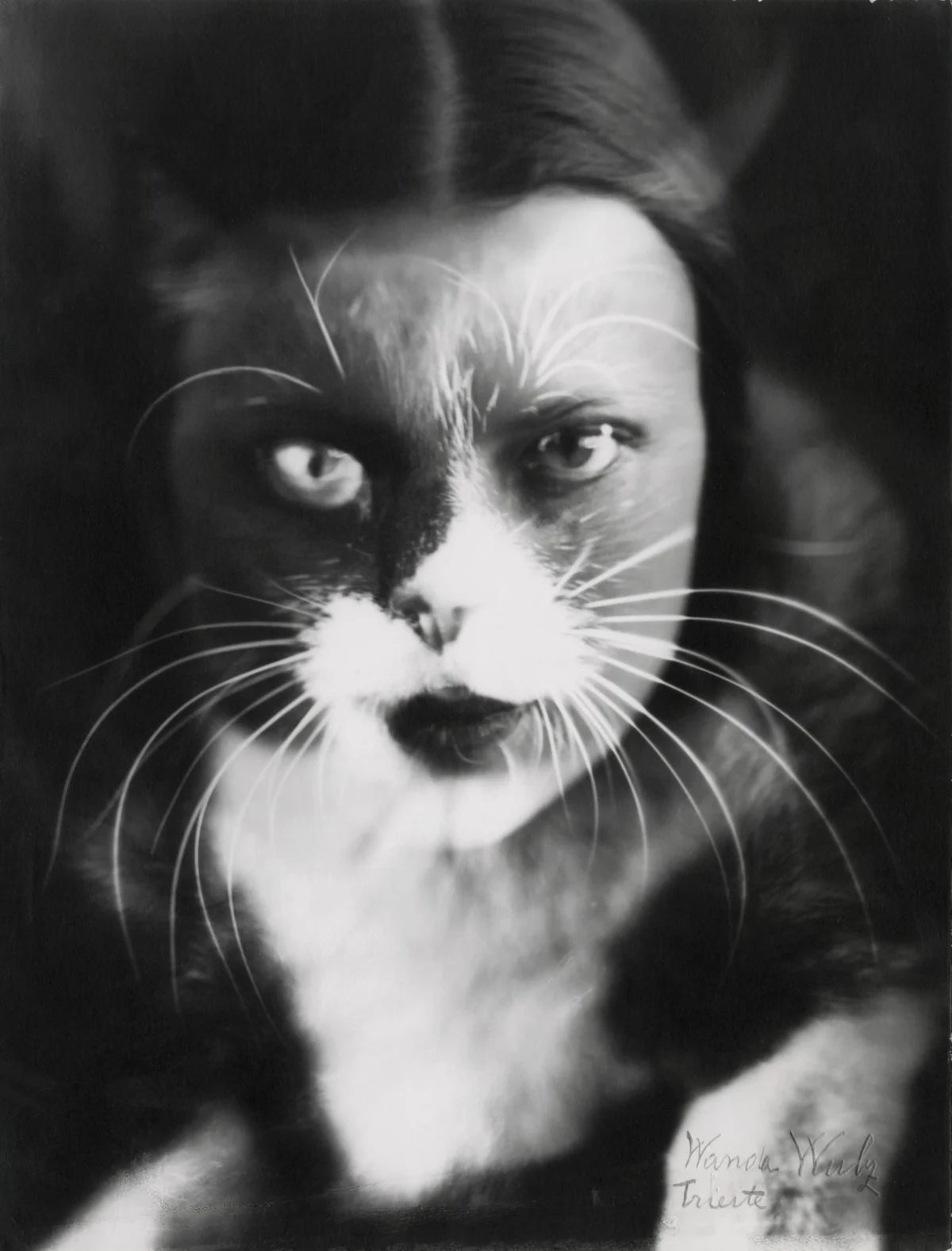
In the restrictive atmosphere of 1920s and 30s Italy, where women were largely confined to domestic roles, Wanda and Marion Wulz sought a different path. Federica Muzzarelli, curator of the upcoming exhibitionWanda and Marion Wulz: Avant-Garde Photography in 20th Century Italyat London’s Estorick Collection, notes that the sisters used their camera to assert their independence and challenge the era’s unbridled patriarchal ideology.
Born in Trieste, Wanda (1903) and her younger sister Marion inherited their father’s professional photography studio, transforming it into a hub for artistic expression. While Wanda was a trained dancer and musician, Marion had a background in art school. Together, they documented modern women—including poets, writers, and athletes like fencing champion Irene Camber and painter Leonor Fini—to promote the concept of female emancipation.
The sisters were ahead of their time, experimenting with image manipulation decades before the advent of digital editing. Their most iconic workI + Catfeatures a self-portrait of Wanda superimposed over the face of their pet, Mucincina. Muzzarelli explains that this technique, which involved layering negatives, served as a feminist statement on identity and the cat as a symbol of freedom. This piece was among six works Wanda exhibited at the 1932 National Exhibition of Futurist Photography, an event marking a decade of fascist rule. Although the exhibition was politically charged, Wanda’s participation was driven by a desire to prove her technical parity with her male contemporaries.
Beyond their technical prowess, the sisters fostered a creative community within their Trieste apartment. Fashion designer Anita Pittoni lived with them for years, helping form an informal salon of women dedicated to experimental living. Claudia Baroncini, director of the Fondazione Alinari per la Fotografia, which manages the sisters’ archive, notes that their work was a fusion of reality and artistic vision. The sisters were also masters of portraiture, meticulously adjusting negatives to refine their subjects’ features, a skill that made them highly sought after by prominent women of the time.
The sisters frequently photographed one another, capturing striking, modern images such as Marion’s portrait of Wanda in motorcycle goggles and Wanda’s intimate, close-up shots of Marion. During the liberation of Trieste in 1945, Marion documented the arrival of Allied forces and the withdrawal of fascist troops from their apartment terrace, demonstrating her equal role in their creative partnership.
Despite their early success, the post-war years proved difficult. The sisters continued to work until the 1970s but struggled financially, eventually closing their studio in 1981. Following Wanda’s death in 1984, Marion spent her final nine years documenting their shared history in personal diaries. Reflecting on their legacy, Baroncini observes that the sisters were largely unaware of their historical significance. More than 120 years after their births, they are finally being recognized as masters of their craft, having defied the limitations of their time to leave behind a profound photographic record. The report also notes that contends Muzzarelli, Wanda was never interested in that, the show was staged to mark 10 years since the fascist revolution but. The report also notes that “She showed she had the ability and skill to create a photomontage,” says Muzzarelli. The report also notes that they were regarded as mothers and homemakers. The report also notes that as the only woman taking part, that she was every bit as capable as the men, she just wanted to show. The report also notes that “Wanda wanted to explore the idea of female identity, of the cat as a free creature, a symbol of freedom,” says Muzzarelli, who believes another picture Wanda showed in the 1932 exhibition – Futurist Breakfast, showing items from a woman’s dresser – was also included to make a feminist point. The report also notes that with her, they created a kind of club of artists – women who wanted to experiment with new ways of living.







Comments