
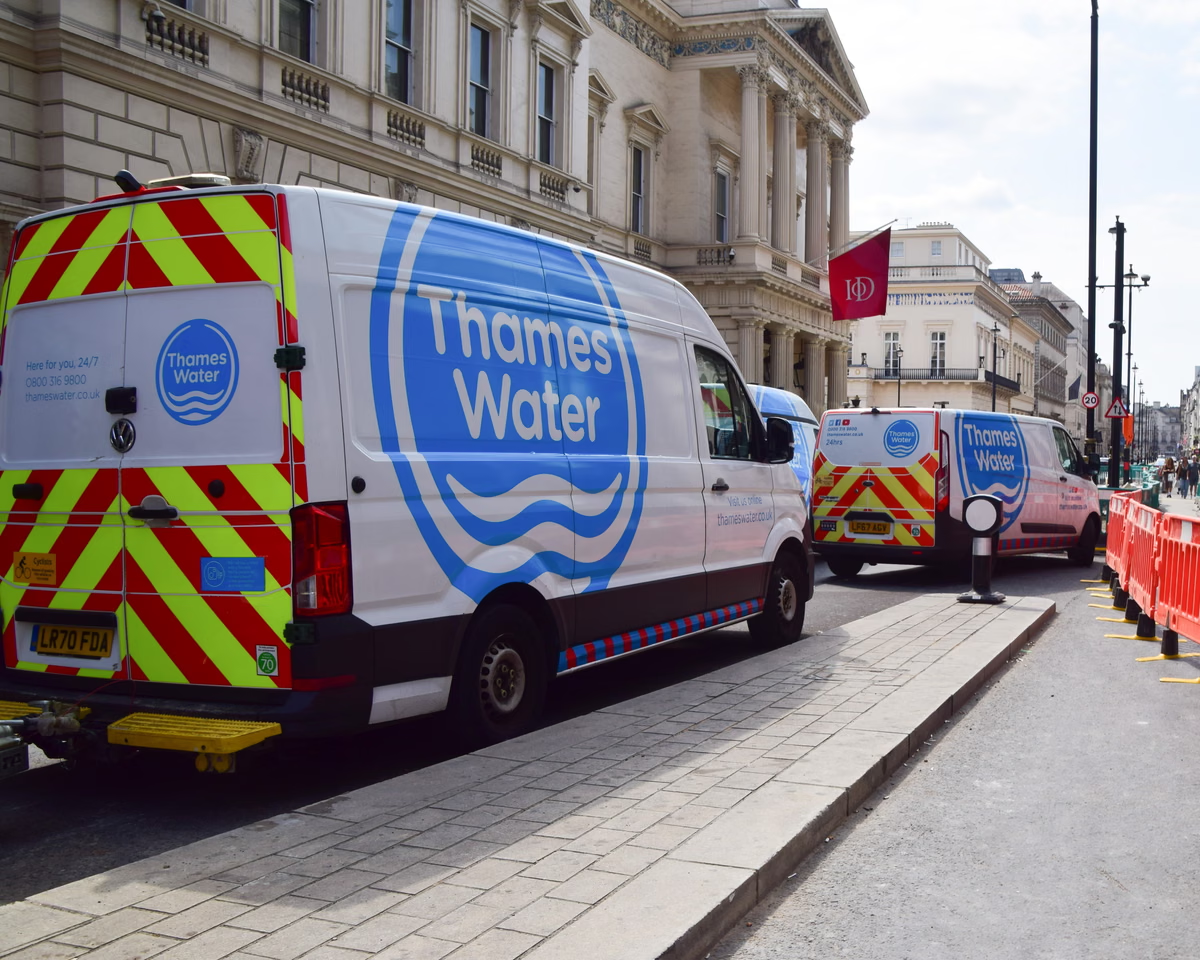
Prime Minister Andy Burnham is evaluating a significant reform of the nation’s insolvency laws as part of a broader strategy to bring essential services, including water and energy companies, under public control. Sources familiar with the discussions indicate that the government is exploring various options to deliver on a campaign promise to fundamentally restructure how these utilities operate.
A central focus of these deliberations is the special administration regime (SAR). Officials are examining whether modifying these rules could simplify the process of placing struggling firms, such as Thames Water, into insolvency proceedings to enable a subsequent state takeover. This potential legislative shift is viewed as a critical step in a planned 10-year project to transition utilities into public ownership, though it risks provoking intense legal opposition from creditors.
The Prime Minister has previously committed to building an economy where life’s essentials are managed under stronger public control to ensure affordability. In June, he expressed a clear preference for public ownership of Thames Water, which currently faces the burden of a £20bn debt. Government officials have noted that while they are not ruling out any options, they are carefully assessing the legal and financial complexities involved in such a transition.
Housing Minister Matthew Pennycook emphasized that the government remains committed to addressing failures in the water industry, citing rising bills and frequent pollution incidents. While Downing Street has denied reports that plans for Thames Water’s administration were shelved, officials confirmed they are conducting a thorough review of all potential routes, including legislative amendments.
The current special administration framework presents two primary obstacles. First, companies can only enter administration if they are insolvent or failing to provide basic services; currently, Thames Water maintains support from creditors who hope to retain ownership. Second, the existing legal duty of an administrator to maximize returns for creditors makes it difficult for the government to assume control without incurring substantial costs.
To overcome these hurdles, a group of Labour backbenchers—including Andrew Pakes and Helena Dollimore—has collaborated with the Good Growth Foundation to propose amendments to the upcoming water bill. Their plan suggests introducing new financial and environmental triggers for special administration, alongside a “bail-in” mechanism. This would force shareholders and creditors to absorb losses first, thereby protecting taxpayers, while granting ministers the authority to impose haircuts on creditors. The proposal also suggests shifting the process from the courts to regulators to expedite proceedings.
Praful Nargund, director of the Good Growth Foundation, argued that emergency legislation could prevent prolonged litigation and ensure the regime protects the public from the consequences of shareholder failure. Meanwhile, Pakes noted that the challenge lies in preventing companies from driving up the costs of the SAR process through legal challenges.
However, the prospect of such legislation has drawn sharp criticism from creditors, who have threatened judicial reviews. A source close to the creditors warned that rejecting a fully funded £10bn turnaround plan in favor of an unfinanceable ownership model would be unprecedented. They cautioned that such a move would likely result in extensive litigation, the transfer of significant risks to taxpayers, and lasting damage to investor confidence across regulated sectors in the UK. The report also notes that sources have said the prime minister is considering a range of options as he seeks ways of delivering on his promise to radically reshape the way England’s water and Britain’s energy companies are run. The report also notes that according to those briefed on his thinking, is to change the so-called special administration regime (SAR) to make it easier to put companies such as Thames Water into insolvency proceedings, and then take control of them afterwards, one possibility. The report also notes that a government source said: “Our water industry has not been working for people for far too long. The report also notes that that’s why this government is looking at how we can give the public more control and help keep bills as low as possible.”. The report also notes that the former environment secretary, said earlier this year she was opposed to a planned £10bn bailout by existing creditors because it did not offer value for money, emma Reynolds. The report also notes that the process is likely to be legally difficult because many of the creditors are US-based hedge funds with a history of taking an aggressive legal approach to protecting their investments.







Comments