
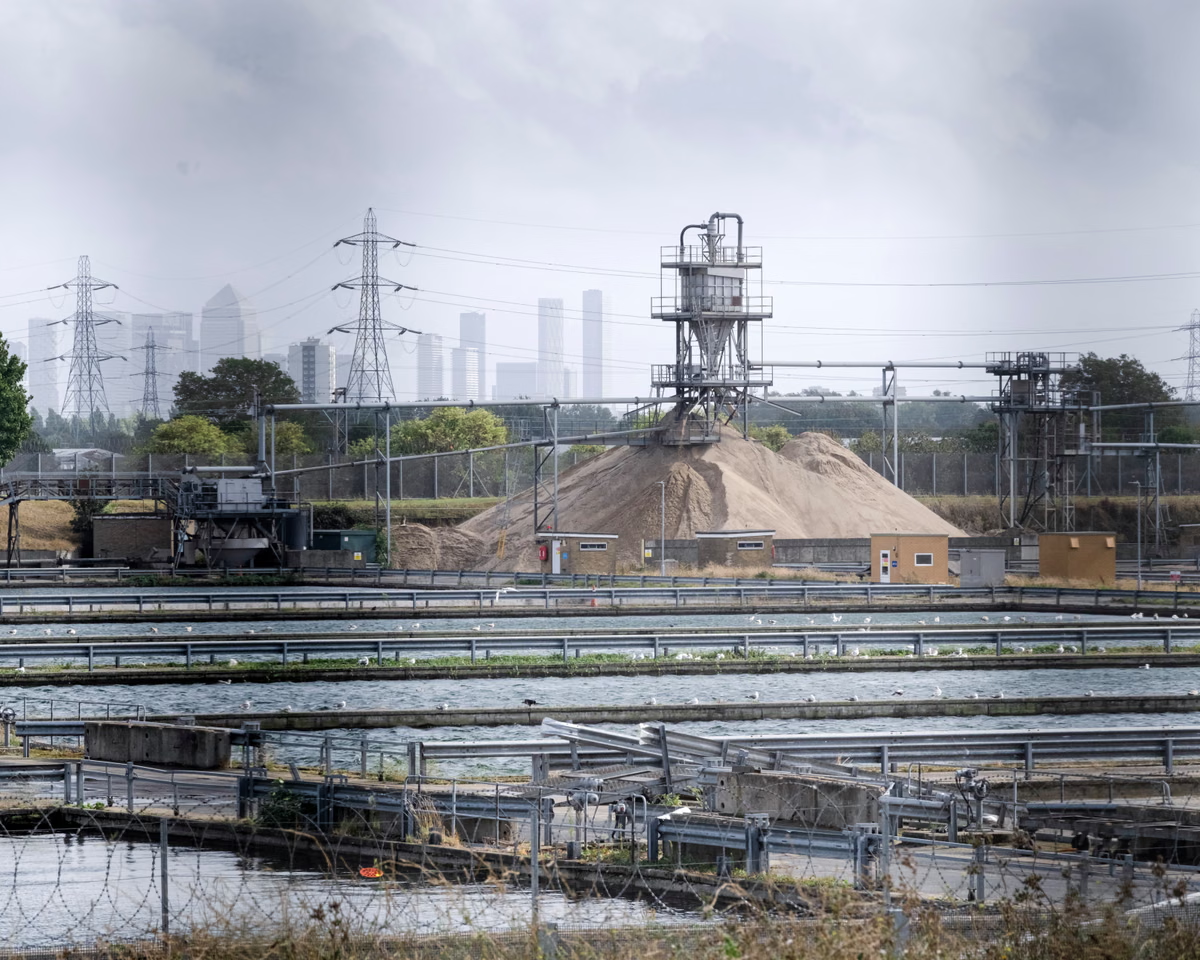
A cross-party group of MPs is pressuring the government to seize control of the failing Thames Water utility, urging ministers to immediately halt ongoing talks with the US hedge funds currently managing the firm. The environment, food and rural affairs committee (Efra) has recommended that the government explore emergency legislation to assume control of the company’s financial operations, aiming to stabilize a business burdened by £20bn in debt.
Efra committee chair Alistair Carmichael labeled it “unbelievable” that the special administration regime (SAR), designed for insolvent water companies, has not been triggered on performance grounds. Environment secretary Angela Eagle has previously suggested that existing laws make the SAR difficult to implement, largely due to maneuvers by debt-holding hedge funds seeking a renegotiated deal.
The committee’s report criticizes Ofwat and the government for continuing to engage with a consortium of distressed-debt specialists, arguing they lack the necessary expertise to manage a critical public utility. Carmichael noted that these creditors remain opaque, consistently seeking relief from environmental penalties while simultaneously collecting millions in debt interest. He emphasized that “Thames Water’s 16 million customers have largely lost faith in it,” citing persistent issues with pollution, rising bills, and infrastructure decay.
The intervention follows a debate involving 64 MPs regarding a 200,000-signature petition that called for a referendum on returning the privatized water industry to public ownership. The Efra committee expressed significant concern that regulators failed to conduct adequate due diligence on the consortium now steering the firm. This group, operating under the name London & Valley Water, includes major entities such as BlackRock, M&G, Silver Point Capital, and Elliott Investment Management. The latter is led by Paul Singer, a prominent donor whom Bloomberg characterized as one of the world’s most feared investors.
The consortium is currently seeking to restructure billions in debt, having requested leniency regarding environmental fines potentially worth up to £1bn, as well as concessions on targets related to leakage and pollution. The committee warned that such demands prioritize investor gains over the essential operational recovery required. According to the report, the creditors’ primary strategy involves extracting value from debt rather than fostering long-term stability.
Addressing the prospect of an SAR, Carmichael suggested that even if the state incurs short-term liabilities, these costs could eventually be offset by a future sale to a more suitable buyer. The committee concluded that the company is effectively “at the end of the road” and that current management strategies are entirely unacceptable.
In response to the report, a spokesperson for the London & Valley Water consortium stated their enhanced proposal offers the fastest route to resolving Thames Water’s difficulties. They claimed the plan includes writing off billions in debt, investing £10bn of new capital into infrastructure, and ensuring all fines are eventually paid without additional costs to taxpayers. The consortium also pledged that no dividends would be taken until the company is fully restored, with a new board appointed to oversee its transformation and rebuild public trust. The report also notes that which has debts of £20bn and is being controlled by a group of 100 hedge funds and distressed-debt investors, the MPs said in a report that ministers should consider emergency legislation to take control of its financial affairs to stabilise the company, adding their voices to demands that the prime minister takes public control of the company. The report also notes that “Thames Water’s 16 million customers have largely lost faith in it,” he said. “They are sick of seeing their waterways polluted, their bills going up, and drinking water gush through broken pavements while supplies run low. The report also notes that but not by giving the keys back to the people who have been joy-riding in the family car, we believe Thames Water can be turned around. The report also notes that including an SAR or using fresh legislation to draw a line under the debacle and restore stability to the sector by putting Thames Water on a sound footing for new buyers, the report said ministers should explore all potential alternative options. The report also notes that the intervention comes after 64 MPs debated a 200,000-strong petition, set up by the campaigner Ash Smith of Windrush Against Sewage Pollution, to hold a referendum on putting the privatised water industry back into public ownership. The report also notes that “Whilst keeping the company in limbo by drawing out negotiations, these creditors are simultaneously reaping millions in debt interest and fees.



Comments