
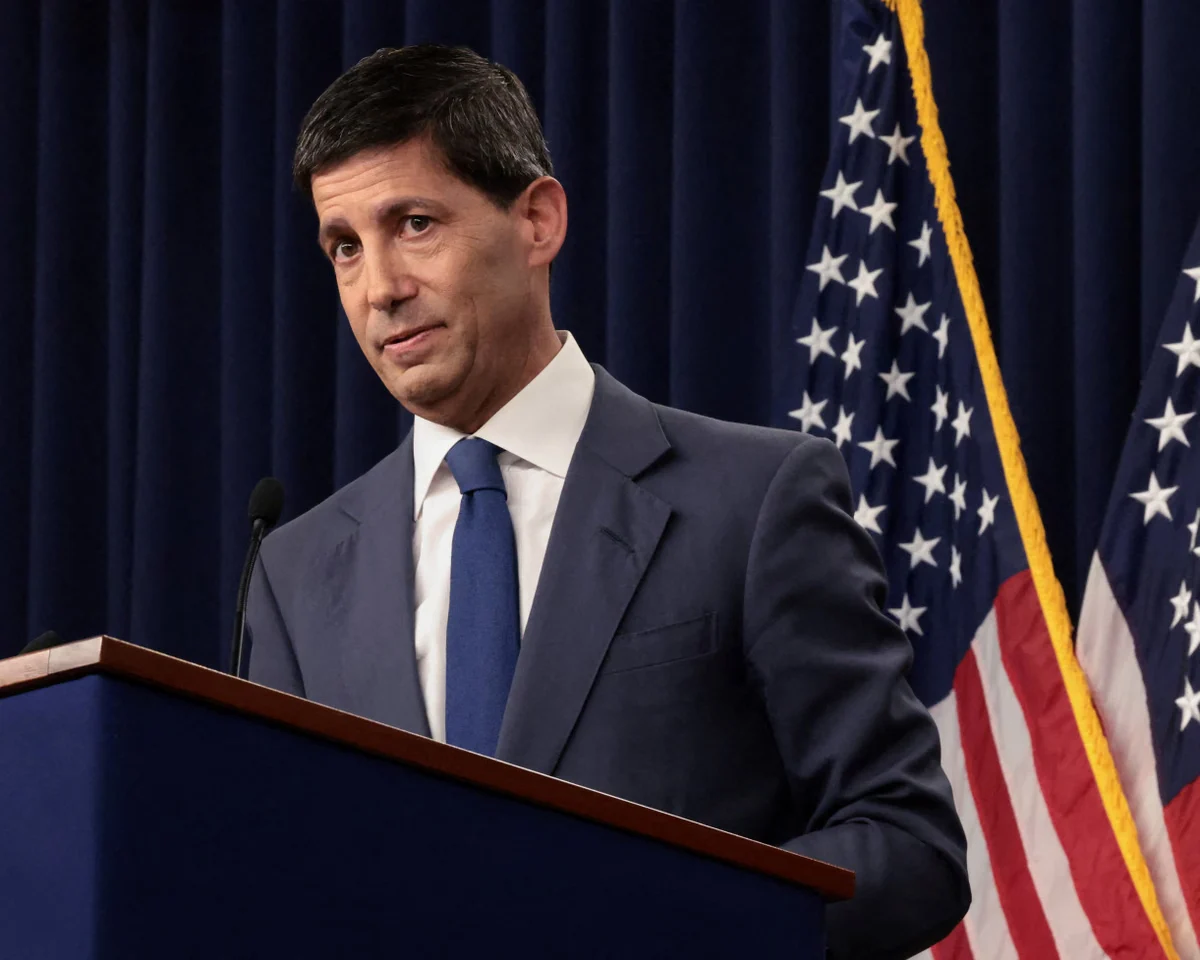
The US Federal Reserve increased interest rates on Wednesday, marking the first such move since 2023 as the central bank intensifies its efforts to curb inflation. The open market committee reached a unanimous decision to raise the benchmark rate by a quarter-percentage point, establishing a new target range of 3.75% to 4%.
Fed Chair Kevin Warsh defended the policy shift, stating that inflation has remained excessively high for too long. He noted that recent summer data did not demonstrate a meaningful improvement in underlying economic trends. While Warsh acknowledged that shifting global conditions have influenced the committee’s outlook, he declined to discuss specific geopolitical crises, such as the conflict between the US, Iran, and their proxies, despite the resulting rise in Brent crude prices.
The hike places Warsh in a potential standoff with Donald Trump, who has publicly demanded that the US maintain the lowest interest rates globally. Trump, who originally nominated Warsh with the expectation of rate cuts, has threatened to restrict trade with countries maintaining a deficit if the Fed refuses to lower rates. Warsh emphasized the importance of Fed independence, asserting that the bank will allow policymakers to manage trade and fiscal agendas while maintaining its own lane.
Economic forecasts released by the committee indicate that most officials anticipate another rate hike before the end of the year, with four members projecting rates could climb to 4.25%–4.5% by year-end. Despite relatively positive projections for economic growth and unemployment, officials estimated it may take until 2029 for inflation to return to the 2% target.
Market volatility has intensified as concerns regarding inflation grow. The yield on the 10-year Treasury note recently hit a 19-year high. Additionally, the energy sector has faced significant pressure, with gas prices remaining roughly $1 per gallon higher than last year and diesel fuel hitting record levels of $6.31. These price increases have contributed to a noticeable decline in consumer sentiment and a drop in real hourly earnings, which fell 0.1% year-over-year in August after accounting for inflation.
Political discourse surrounding the economy has sharpened ahead of the November elections. While voters remain divided on which party is better equipped to manage the cost-of-living crisis, the economic environment has become a central campaign issue. Trump has pledged a $5,000 “Trump dividend” for Americans if his party secures control of Congress, a proposal that has faced criticism for potential fiscal implications following the national debt reaching a record $40 trillion last month.
This tightening of monetary policy follows a period where the Fed had previously lowered rates throughout 2024 and 2025. After inflation peaked at 9.1% in June 2022, the Fed had engaged in 11 consecutive rate hikes to stabilize the economy. The current shift toward higher rates highlights the ongoing struggle to balance growth, employment, and price stability in a volatile global market. The report also notes that the current Fed chair, on a collision course with Donald Trump, this is the first time the Fed has raised rates since July 2023 and potentially sets Kevin Warsh. The report also notes that he avoided calling out the US-Israel war with Iran by name, though Warsh acknowledged changing geopolitics. The report also notes that “There’s no hiding from hot spots around the world, and our judgment about what is the most likely or least likely of the geopolitical situation has changed,” he said. The report also notes that warsh also declined to answer questions about how Trump would react but reiterated that Fed independence is “a two-way street”. The report also notes that that is the way we can stand up here and call them the way we see them,” he said. The report also notes that the White House did not immediately respond to comment. The report also notes that on average, $1 a gallon more expensive compared with a year ago, gas prices have remained.

Comments