
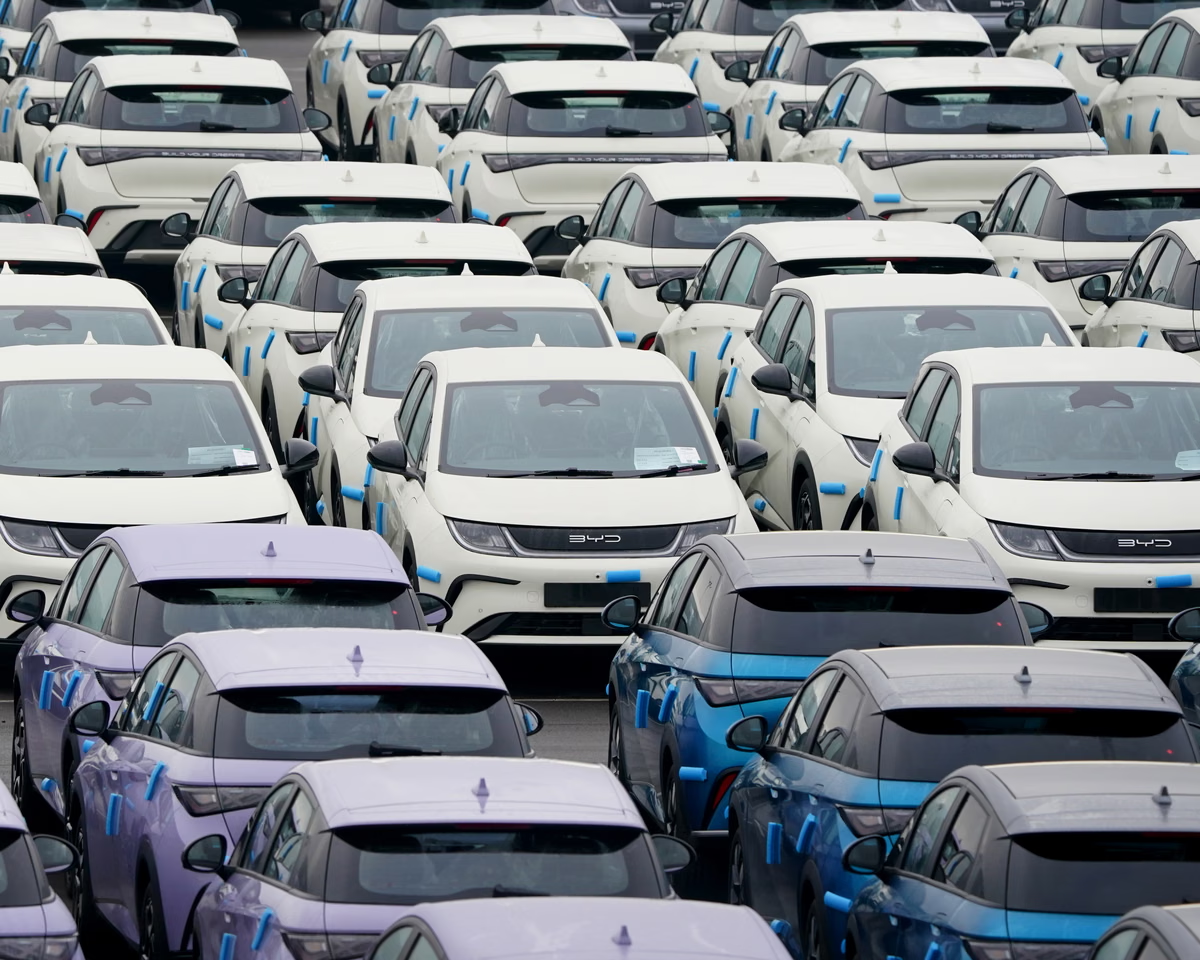
Sales of Chinese hybrid cars have surged across the European Union over the past four and a half years, heightening anxiety in Brussels regarding the long-term viability of the domestic automotive sector.
In 2022, only 659 Chinese-made fully hybrid vehicles, where a petrol or diesel engine charges the motor and battery, were sold in the EU. Following the introduction of anti-subsidy tariffs on fully electric vehicles from China in 2024, sales of these hybrids climbed dramatically to 160,662 in the first seven months of the year.
Eurostat figures indicate that sales of Chinese plug-in hybrid electric vehicles, which recharge via both an internal combustion engine and an external power source, also jumped significantly from 56,706 units in 2022 to 217,764 between January and July.
This influx has prompted Brussels to request that China voluntarily lower hybrid exports or face potential safeguard measures, which are expected to involve quotas.
The German Association of the Automotive Industry, VDA, urged the European Commission to evaluate the effects of trade safeguards such as quotas, price floors, and tariffs.
The VDA emphasized that the EU must maintain effective trade defense instruments to ensure fair competition where unfair practices are proven.
Data from the European Automobile Manufacturers’ Association reveals that hybrid models now constitute nearly 37 percent of the broader market, while electric vehicles represent slightly above 21 percent.
Manufacturers including BYD, Chery, and Leapmotor have achieved triple-digit sales growth within the EU. Geely remains the leading Chinese brand in the bloc with 205,000 vehicles sold during the first eight months, bolstered by brands such as Sweden-based Volvo and Polestar.
BYD follows closely with a 163 percent year-on-year sales increase, reaching 177,000 units. Both firms, alongside SAIC, currently outperform Tesla, which recorded 142,000 sales in the bloc over the initial seven months, though Volkswagen Group leads overall with two million sales in eight months.
Meanwhile, European electric vehicle sales are rising rapidly in Germany, France, and Slovenia, contrasting with more modest gains in the UK and Ireland.
European Commission President Ursula von der Leyen recently characterized the bloc’s daily trade deficit with China as an unsustainable tipping point. EU trade commissioner Maroš Šefčovič and Chinese counterpart Wang Wentao are scheduled to meet on October 8 and 9 to negotiate a potential trade truce. The report also notes that up 75% to 69,000 units in August, and in France, where sales are up by 112%, sales of electric cars are also growing fast in parts of Europe including Germany. The report also notes that in Slovenia, sales have increased by 266%. The report also notes that on Thursday the German car industry for the first time indicated it would be willing to consider tariffs on Chinese hybrids specifically. The report also notes that the use of WTO-compliant trade defence instruments must be considered; these are legitimate and tried-and-tested means of achieving a level playing field and safeguarding fair conditions of competition.”, where unfair conduct is proven. The report also notes that up 27% in August to 28,000 EVs sold, and Ireland, up just 7% to 2,200 units, this compares with the UK. The report also notes that the European Commission president, Ursula von der Leyen, described the now €1.18bn-a-day trade deficit between the bloc and China as having reached an unsustainable “tipping point”, earlier this month. The report also notes that who meet in their third summit in 12 months in Washington on Thursday, also hoping for a trade truce are Donald Trump and Xi Jinping.






Comments