
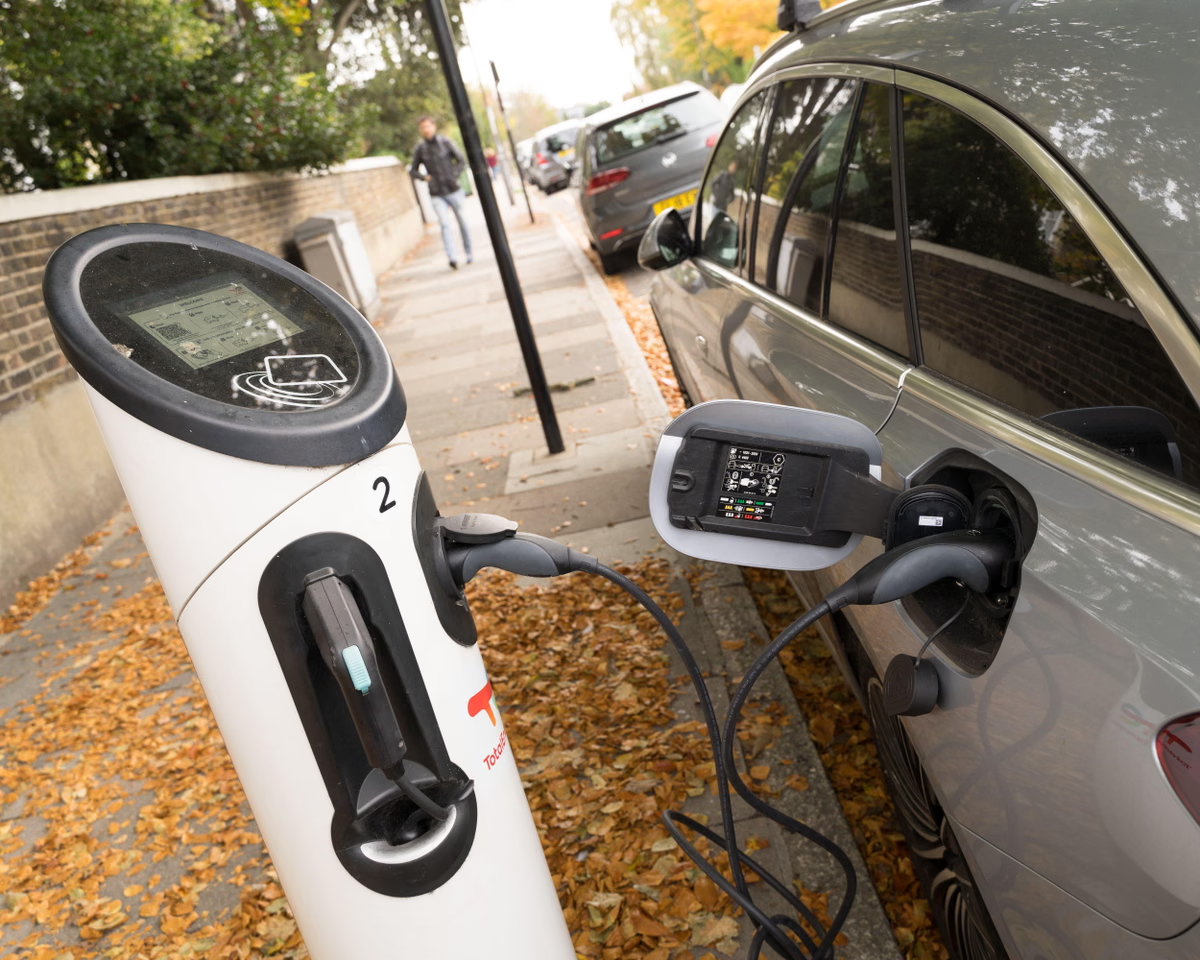
A recent analysis has revealed that 75% of the UK’s 20 most popular plug-in hybrid electric vehicles (PHEVs) are incompatible with rapid charging technology. This shortcoming has prompted industry experts to label many of these vehicles as little more than expensive “petrol cars pulling round a heavy battery.”
While car manufacturers frequently market PHEVs as a versatile solution for long-distance travel, providing an electric mode for daily commutes and a combustion engine for extended trips, the practical utility of these vehicles is increasingly under scrutiny. According to findings from ChargeUK, only 26% of the top 20 selling PHEV models—including the Ford Kuga, Hyundai Tucson, and Jaecoo 7—can access rapid charging points delivering 50kW or more of power. The cars, which can run on electric batteries as well as combustion engines, have been promoted by carmakers as a way to cover long distances in a single drive – unlike fully electric cars – while still reducing emissions.
Access to these high-speed chargers is critical for minimizing wait times at transit hubs, where a battery can typically be topped up in under 30 minutes. Without this capability, drivers are confined to much slower charging speeds, often resulting in multi-hour wait times that discourage electric use and force a greater reliance on traditional petrol engines. Meaning drivers wanting to recharge mid-trip may face a wait of several hours, cars that cannot use them are limited to much slower charging speeds.
Shane Brennan, chief executive of ChargeUK, warned that promoting PHEVs as a significant step toward electrification is a flawed strategy. He described the reliance on this vehicle category as a “spectacular own goal,” noting that drivers who cannot effectively utilize the public network for rapid charging will inevitably default to fossil fuel dependency. PHEV drivers unable to charge on the public charging network quickly fall into patterns of being petrol reliant.
Official data highlights the growth of this market, with 227,000 PHEVs registered in the UK last year, representing a 35% increase over 2024. Despite this popularity, studies indicate that these vehicles emit significantly higher levels of planet-warming pollution in real-world scenarios than official testing suggests. Even the government has acknowledged in recent zero-emission mandate consultations that PHEVs are driven on electric power far less frequently than anticipated, noting that official emission calculations tend to overestimate their environmental benefits. A further 180,000 have been sold so far this year.
A clear gap exists between these hybrids and fully electric vehicles. All of the top 20 pure electric models sold in the UK last year were capable of rapid charging, with 64% supporting even faster ultra-rapid speeds. In contrast, none of the top 20 PHEV models can utilize ultra-rapid chargers, which are essential for adding substantial range in just a few minutes. The MG HS and the BMW 3 Series, none of which can use rapid chargers, the top 20 models sold also include the BYD Seal.
The automotive sector is currently navigating shifting sales targets, with major manufacturers adjusting their incentives. Data from Autotrader shows that while average discounts on petrol vehicles rose to 11.9% in September, discounts on electric vehicles dipped to 10.7%. Industry analysts attribute this trend to manufacturers like MG and Mercedes-Benz scaling back incentives as they approach their annual Zero Emission Vehicle (ZEV) mandate goals.
The government maintains its defense of the technology, with a spokesperson stating that PHEVs remain a practical option for many motorists, producing 40% lower carbon emissions on average compared to traditional internal combustion vehicles. Nevertheless, with intense pressure from the automotive industry—including recent warnings from Nissan regarding potential investment cuts—the government is reportedly considering further adjustments to pure EV sales targets in the upcoming October consultation.







Comments