
When you settle a bill for dinner, pay for a taxi, or cover a friend’s coffee, the expectation is often that you will be reimbursed. However, when the money fails to arrive after several days, many people are left wondering whether to follow up and, more importantly, how small is too small to chase.
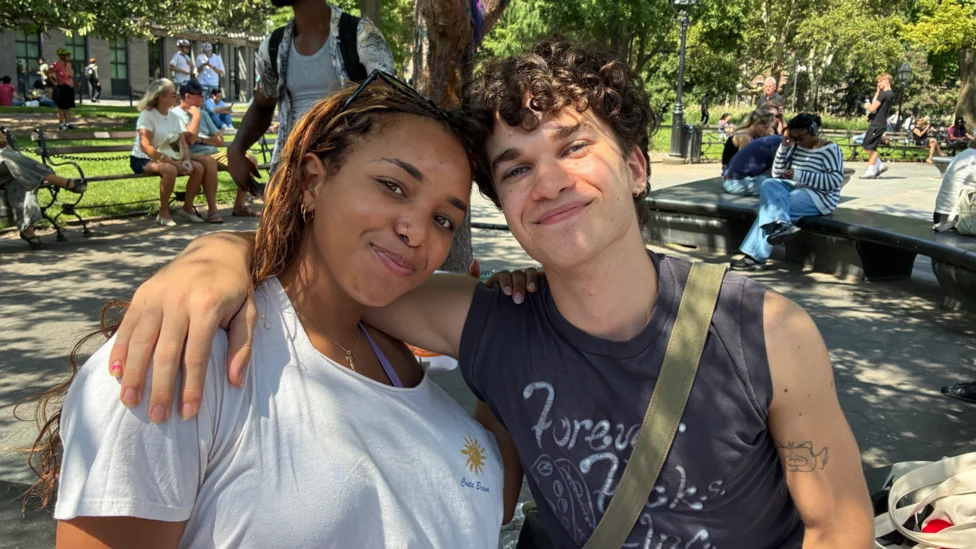
For some, a reminder is worth it for as little as $5 (£3.70), while others feel that requesting anything under $20 (£15) is more uncomfortable than simply absorbing the cost. Henry Payne, a 21-year-old in New York, says he has sent a request for $8.50, but he draws the line at $8. He notes that while he is willing to send one request, he finds doing so twice to be “insane,” preferring to just “swallow” the loss. He admits he can be forgetful himself, telling friends to feel free to double-request him if he has missed a payment.
The social anxiety surrounding these transactions is common. Nineteen-year-old Kaz Jahanbini, another New York student, describes the experience of needing to ask for money as frustrating, particularly because he makes it a point to repay others immediately. His approach is to “keep your wallet close but your friends closer.” His friend, Nouria, notes that as a student, every dollar matters, though she typically only asks for reimbursement if the debt exceeds $10.
Data highlights the scale of this friction, with a recent study revealing that 76% of Gen Z individuals who fronted money for group expenses reported they were not fully repaid. Furthermore, 55% of those respondents stated that the experience created tension or damaged their relationships. Money expert Laura Pomfret suggests that many people struggle with embarrassment, noting that in the UK, people can be particularly hesitant about appearing like a “cheapskate.” She advises that if someone truly wants their money back, the amount should not matter, and if a friend repeatedly fails to pay, it is wise to stop covering for them in the future.
Cultural differences may also play a role. British student Betsie Brooke-Taylor, 19, views £5 as her threshold for requesting payment because “every little helps.” She suggests that Americans, who have widespread access to payment apps like Venmo, may find it easier to settle small debts. Venmo, which is used by over 95 million people in the US, includes a feature to send automated reminders, a convenience that is less common in the UK where users often have to track down sort codes and account numbers.
Attitudes toward confrontation vary significantly among peers. Annika Violet, 19, says she does not find these conversations awkward at all and will request even small amounts if she is consistently the one paying for a friend. Her advice to others is to “be brave and bold,” adding that if a friend gives you trouble for asking, it might indicate they are not a good friend. Conversely, her friend Hanako Stepper admits to finding it awkward to ask, saying she has never chased anyone for money, though she feels sad when she is not repaid.
Other individuals have adopted different strategies to avoid the conflict altogether. Ella Feuille, 21, sets a threshold of around $15 for requesting money but says she would ask up to three times before giving up. She has identified specific friends who she now knows will not pay her back, so she ensures that expenses are placed directly on their own cards. Her friend, Katrina Dimingot, agrees, noting she prefers a system where friends simply take turns paying for items rather than tracking individual debts. The report also notes that the 21-year-old New Yorker adds that he will chase someone once but “two requests is insane”. The report also notes that what’s the delay, so then I’m thinking for them. The report also notes that betsie believes there’s a cultural difference between Brits and Americans.






Comments