
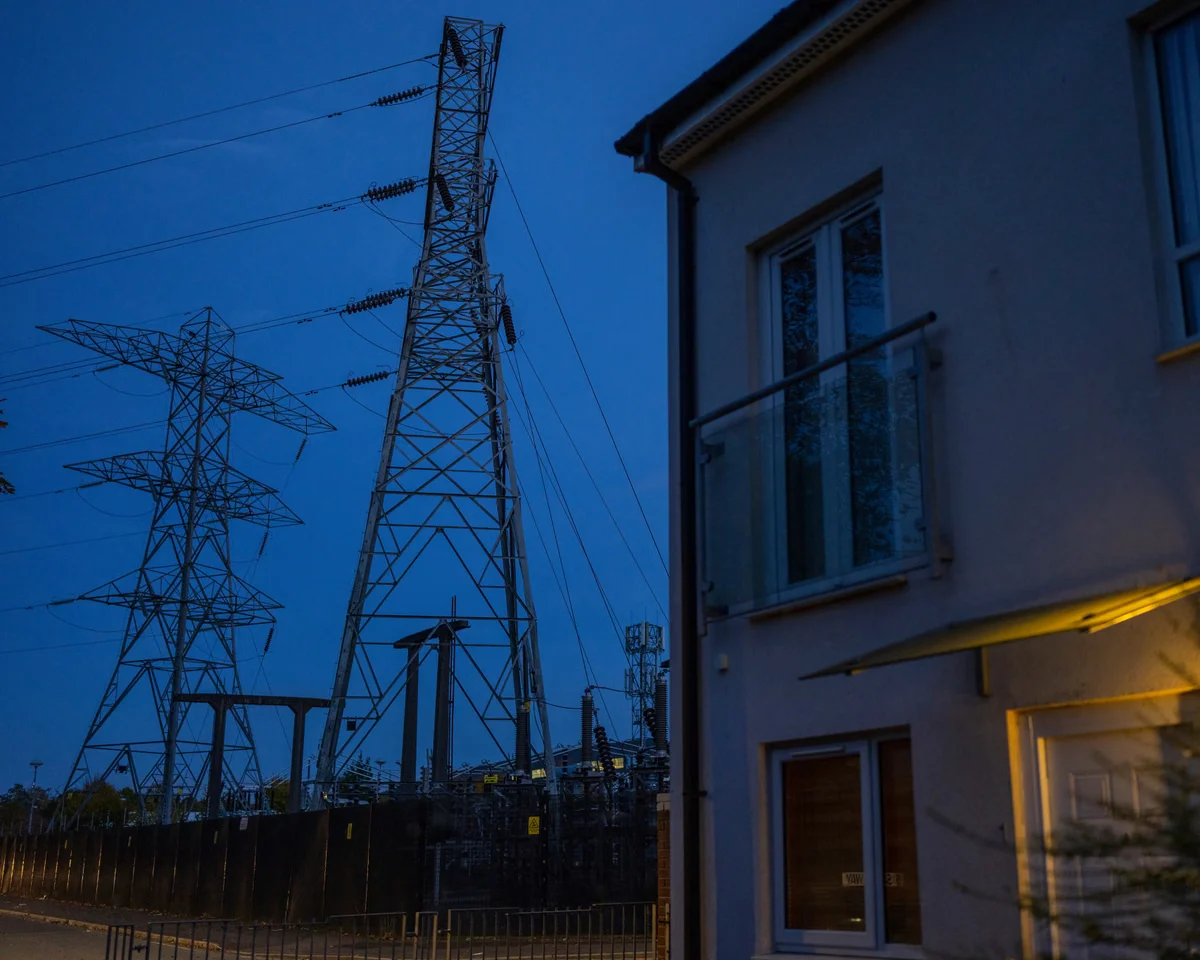
Millions of households and businesses across Great Britain could face power cuts at short notice under updated regulations designed to stabilize the electricity grid. These changes, which take effect this week, grant the National Energy System Operator (Neso) the authority to initiate rotating blackouts during supply shortages without requiring emergency government intervention.
The new protocol allows Neso to disconnect enough electricity demand in a specific area to reduce load by more than 20% with only eight hours of notice. This measure is intended to prevent a total collapse of the power system by implementing three-hour rolling blackouts. The industry regulator quietly approved these modifications to the grid codes late last month, shortly after whistleblowers at Neso alleged that leadership had attempted to obscure blackout risks during a recent heatwave.
A spokesperson for Neso emphasized that this “last-resort contingency measure” would be reserved for “the most extreme and unlikely circumstances.” The operator stated that such actions would only be taken “after all other available options have been exhausted, helping protect the wider electricity system.”
These powers bridge a significant gap between existing protocols—which have not been utilized since the 1970s miners’ strikes—and the government’s broader emergency powers. While the government’s electricity supply emergency code remains in place, it can only be activated by the energy secretary and is designed for prolonged disruptions, such as a major failure at a high-voltage import cable. That government code would impact 90% of users, whereas the new Neso protocol is intended for shorter, more flexible responses to immediate supply squeezes.
Ofgem noted that while the government’s existing emergency powers are “not suited for short-notice use,” the new protocol provides a tool that can be initiated “as quickly as possible” to address sudden imbalances, such as those occurring on a particularly cold winter evening. In a worst-case scenario, a total system collapse could require five to seven days to restore power, a situation the new measures aim to avoid by mirroring the consequences seen in Spain and Portugal last summer.
To mitigate the impact of these potential outages, a list of “protected sites” has been established. This list includes hospitals, water treatment facilities, and locations of national security interest, all of which will be exempt from any planned rolling blackouts.
The new measure joins existing strategies for managing supply shortfalls, such as disconnecting large industrial users and reducing voltage across regional grids. Lowering voltage acts similarly to tightening a sluice gate on a canal; while it reduces the volume and force of electricity, it allows the system to continue functioning. For consumers, this typically results in longer wait times for boiling kettles or charging devices, though it generally avoids disrupting data servers or industrial machinery.
Neso’s proposal to the regulator highlighted that these new measures could “be used more flexibly, be initiated quicker” than the government’s emergency code, and are specifically designed for “a shorter duration.” This shift reflects the growing challenge of managing short-term power imbalances, which are increasingly difficult to predict compared to long-term outages.





Comments