
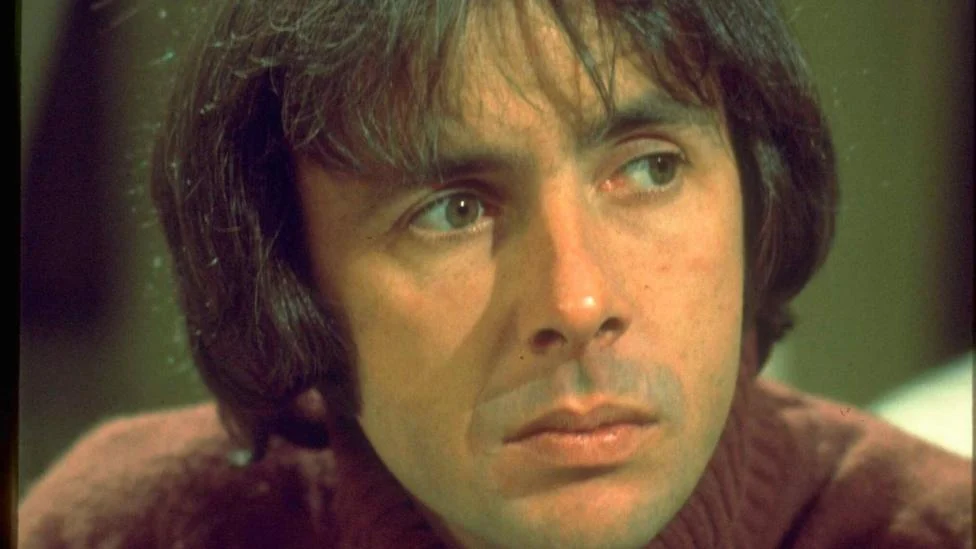
Richard O’Sullivan, the beloved British actor best known for his portrayal of Robin Tripp in the 1970s sitcoms Man About the House and Robin’s Nest, has died at the age of 82. He passed away while surrounded by his family at Brinsworth House, a care home in west London managed by the Royal Variety Charity, where he had resided for the past 23 years.
Giles Cooper, representing the Royal Variety Charity, paid tribute to the actor, describing him as a “master of effortless charm and impeccable comic timing.” Cooper noted that O’Sullivan brought warmth and wit to millions of viewers, cementing his status as a giant of British television, and added that he would be deeply missed by everyone at the organization.
The actor’s son, James O’Sullivan, shared a heartfelt statement reflecting on his father’s character. “My dad was as funny and charming in real life as he appeared on our TV screens over the years,” he said. James noted that while much of his father’s career preceded his own birth, he was grateful to have witnessed his talent through the many re-runs of his work. He also expressed his gratitude to the staff at Brinsworth House for their kindness and care, concluding, “Always kind-spirited, good humoured, a doting grandfather and a wonderful dad – I will miss him dearly.”
Born in London in 1944, O’Sullivan began his career as a child actor in the 1950s, appearing in uncredited roles before securing parts in the Children’s Film Foundation production Raiders of the River and Sir Peter Hall’s 1956 staging of Love’s Labour’s Lost at the Royal Shakespeare Theatre. His early film credits included the 1961 social drama Spare the Rod and appearances alongside Sir Cliff Richard in The Young Ones (1961) and Wonderful Life (1964). In 1963, he played Pharaoh Ptolemy XIII in the epic Cleopatra, starring Elizabeth Taylor and Richard Burton.
His transition into comedy was marked by roles in The Ronnie Barker Playhouse and The Galton and Simpson Comedy. By 1973, he landed his breakout role in Man About the House, which co-starred Paula Wilcox, Sally Thomsett, Yootha Joyce, and Brian Murphy. The show’s premise—a man sharing a London flat with two single women—was considered daring for the era. To avoid scrutiny from their landlords, George and Mildred Roper, the women claimed their flatmate was gay, a ruse that provided the foundation for the show’s humor and made it suitable for prime-time viewing.
Following his success in the 70s, O’Sullivan took on the title role in the ITV series Dick Turpin between 1979 and 1982, portraying the 18th-century highwayman. He returned to sitcoms in the 1980s with Me and My Girl, where he played a widower living with his adolescent daughter alongside cast members Tim Brooke-Taylor, Joanne Ridley, and Joan Sanderson. His later television work included the 1991 sitcom Trouble in Mind, which focused on a psychiatrist experiencing a mid-life crisis.
O’Sullivan’s career eventually slowed, with later appearances including a guest spot on Noel’s House Party and a starring role in the 1996 film Holed, a comedy centered on a golf match. Throughout his extensive career, he was also recognized for his work in Doctor at Large. The report also notes that although much of his career happened before I was born, I was fortunate enough to be able to enjoy and witness his incredible talents on the countless re-runs of his shows that made him the respected and loved actor that he was. The report also notes that born in London in 1944, O’Sullivan started his career as a child actor in the 50s and 60s, playing uncredited roles in dramas in 1953. The report also notes that a social commentary drama about a teacher working in a tough, deprived area, starring Max Bygraves and Donald Pleasance, he also appeared in 1961 film Spare the Rod. The report also notes that o’Sullivan played a difficult and defiant student in his final year. The report also notes that including 1963’s Cleopatra, as Pharoah Ptolemy XIII, which starred Elizabeth Taylor and Richard Burton, he moved towards comedy, in shows such as The Ronnie Barker Playhouse, in 1968, and The Galton and Simpson Comedy the following year, after gaining steady work in dramatic roles. The report also notes that ray Galton and Alan Simpson went on to create the sitcoms Hancock’s Half Hour and Steptoe and Son. The report also notes that but what it implied,” British Comedy Classics said, external of the series, the issue was not the living arrangement itself.




Comments