
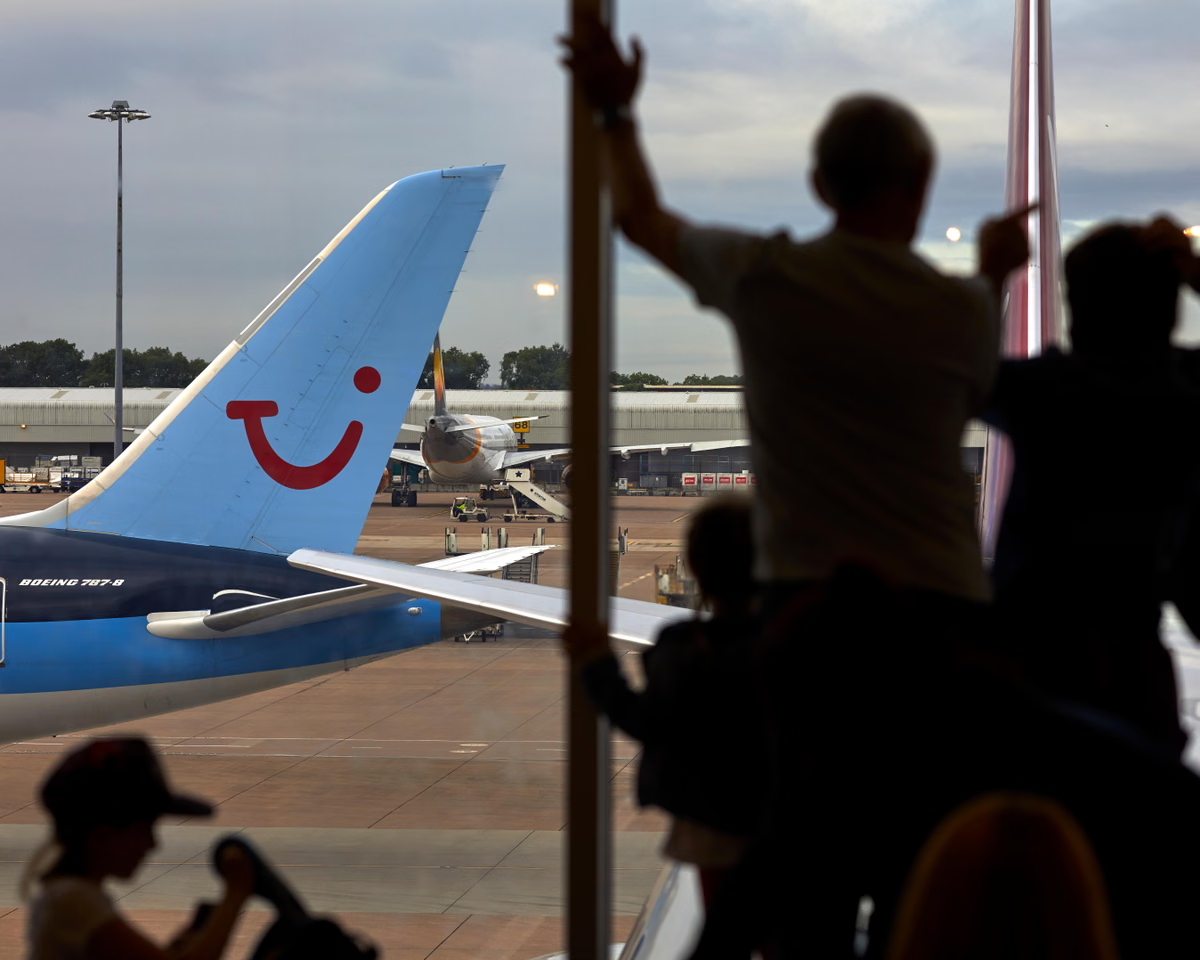
Holidaymakers are increasingly waiting until the last minute to book their trips due to the continuing uncertainty caused by the war in Iran and the cost of living crisis, according to Tui, Europe’s largest travel company. The firm stated that the conflict has cost it €60m (£51m) so far, causing a significant shift in the timing of travel decisions.
In the weeks following the outbreak of the war at the end of February, Tui recorded a temporary drop-off in customers wanting to travel to Cyprus or Turkey. The company described this period as a “volatile market” marked by consumer caution.
Tui’s chief executive, Sebastian Ebel, noted that while travel remains highly relevant to people’s lives, the timing of purchasing decisions has shifted. He attributed this to geopolitical tensions, economic weakness, and rising inflation in Europe’s core markets.
Operational challenges were highlighted by the status of two cruise ships, Mein Schiff 4 and 5, which were in the Gulf in Dubai and Qatar when the conflict in Iran broke out. They were unable to continue their journeys through the strait of Hormuz, leading to the ships being out of service for 12 weeks.
The financial impact of these “bad luck incidents” included the cost of repatriating customers and lost operational income, totaling €40m. “We had to repatriate all customers, 5,000 customers on board, which was a significant cost. And of course, when the ship is not cruising, you don’t have the income,” Ebel told reporters.
Despite these challenges, Ebel noted that demand for summer holidays has picked up in recent weeks. He also addressed the impact of climate change, observing that holiday destinations were often cooler than Germany during recent heatwaves. Consequently, hotel owners are investing in air conditioning for rooms and common facilities, from dining areas to spas.
Europe’s changing climate is prompting travelers to fly during the “shoulder season,” which includes March to May and September to November, to seek cooler temperatures. Ebel emphasized the opportunity in these months, noting that Tui now flies to Heraklion in Crete in November and is coordinating with local organizations to ensure restaurants remain open to serve tourists.
“It’s important to build the offers also for November, December, February, March, because we do see there is opportunity,” Ebel said. He added that the trend is supported by weather conditions and hotel investments in both cooling and heating, which help ensure customer comfort throughout the year. The report also notes that down from €267m a year earlier, while it reported a 3% fall in customers during the period to just under 10 million, the company reported a 43% slide in pre-tax profits to €153m (£131m) between April and June. The report also notes that high fuel prices and a competitive travel market, tui’s markets and airlines division swung to a €17m loss in its third quarter from a €50m profit a year earlier as it was hit by weaker demand for holidays. The report also notes that and the company said demand for summer holidays had picked up in the past four weeks as the peak summer season got under way, tui usually makes most of its money between July and September. The report also notes that the hotels need to support that and some have invested not only in cooling but also in heating; that has helped customers feel comfortable even if there is cooler weather.”.





Comments