
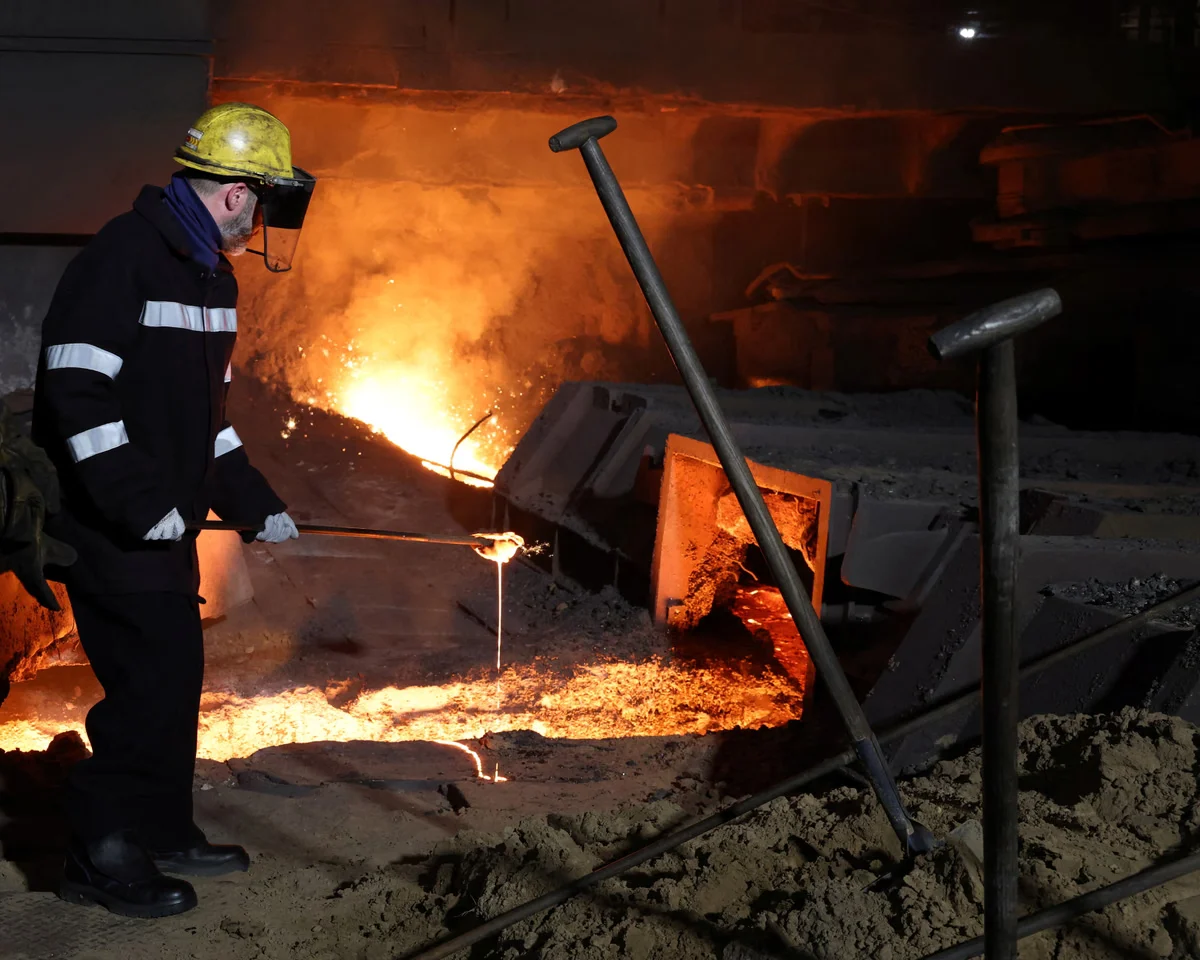
Labour is facing mounting pressure to provide a clear, sustainable strategy for British Steel, following a stern warning from a parliamentary watchdog regarding the ballooning costs of keeping the manufacturer afloat. The public accounts committee (PAC) highlighted the “startling” financial burden, noting that taxpayers currently spend £1.3 million every single day to maintain operations.
British Steel entered public ownership this past July, a decision intended to secure the future of domestic steel production. This move followed a fifteen-month period of government intervention at the Scunthorpe steelworks aimed at preventing closure and protecting 4,000 jobs. Despite these efforts, the total expenditure is projected to reach as much as £1.5 billion by 2028.
Official figures show that between the start of government support and mid-June, £555 million had already been utilized to cover raw materials and employee salaries, a total that excludes additional fees for external advisers. The committee reported that, nearly 18 months after initial intervention, ministers remain unable to articulate a viable business model to place the firm on solid footing.
Clive Betts, the committee’s deputy chair, stated that while nationalization was necessary to prevent immediate job losses, the government has failed to look beyond simple financial support. He emphasized that the company is currently unable to sustain itself, and the state must now take responsibility for defining its long-term financial viability.
The committee further criticized the Department for Business and Trade for failing to provide indicative estimates regarding the ultimate cost to taxpayers. They warned that the government cannot focus its entire industrial support budget on a single entity when other parts of the sector remain in need of assistance. Taxpayers currently face significant uncertainty, with no guarantee that these public funds will ever be recovered.
In response to these concerns, the PAC has called for a comprehensive publication detailing the intended production model, the firm’s role in the UK economy, a clear decarbonisation pathway, and a definitive timeline for achieving financial sustainability. Business Secretary Jonathan Reynolds has previously maintained that the government does not intervene in private enterprise lightly, defending the move as essential for safeguarding heavy industry.
The situation is further complicated by legal and geopolitical tensions. The company’s former owner, Jingye, has initiated a formal process under an international treaty to seek compensation, alleging that British Steel owed it nearly £1 billion at the time of nationalization. Furthermore, the Chinese government has expressed strong dissatisfaction with the developments, placing additional strain on UK-Chinese diplomatic relations.
This scrutiny arrives shortly after the government expanded its nationalization efforts to include Speciality Steel UK, a Yorkshire-based producer, to preserve 1,300 additional positions. As the state deepens its involvement in the sector, the pressure to demonstrate fiscal responsibility and a clear exit strategy for these interventions continues to intensify. The report also notes that british Steel was taken into public ownership in July to protect “the future of steel production”, 15 months after the government stepped in to prevent the closure of its steelworks in Scunthorpe and the loss of 4,000 jo. The report also notes that with the total estimated cost reaching as much as £1.5bn by 2028, but it is costing £1.3m a day to keep the company running. The report also notes that “We also require assurances that the startling levels of funding British Steel is currently receiving do not come at the expense of the wider sector.”.
Comments