
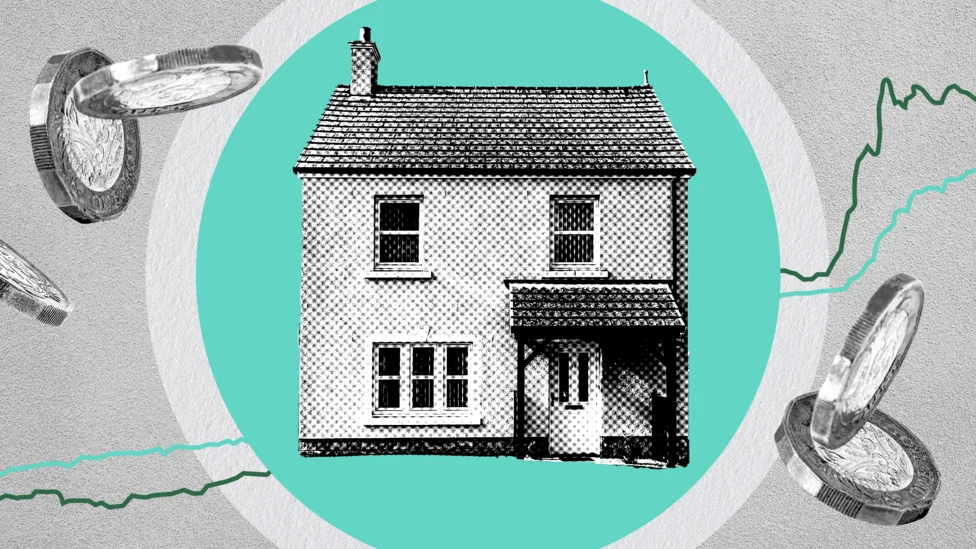
For many, the traditional progression of finishing education, securing employment, and purchasing a home has become an increasingly elusive goal. While prospective first-time buyers today remain at a disadvantage compared to previous generations, there are signs that the housing market may be shifting in their favor.
Statistical data highlights the scale of the challenge: individuals born in the UK during the mid-1990s face only a 25% likelihood of homeownership. In contrast, those in their twenties during the 1990s were nearly twice as likely to secure a property, with even higher rates for the generation preceding them. This long-term decline has been driven largely by property prices consistently outpacing income growth over several decades.
Housing economist Paul Cheshire has illustrated this disparity by comparing the historical rise in house prices against the cost of eggs over the past 71 years, highlighting a stark divergence. A fundamental driver of this crisis is a systemic shortage of new housing. Although the government has previously estimated that England requires 300,000 new dwellings annually to accommodate population growth and smaller household sizes, only 208,000 were completed last year. In fact, the nation has not reached the 300,000-home threshold in at least three decades.
Construction has been hampered by inflation affecting land, wages, and raw materials. Costs for essential supplies like steel, timber, concrete, and insulation tracked with general inflation until the Covid-19 pandemic, after which supply chain disruptions and energy price spikes—further aggravated by conflicts in Ukraine and Iran—drove costs significantly higher. A home that cost £150,000 to build in 2015 now requires roughly £230,000, with analysts projecting an additional 15% increase over the next five years. These pressures, combined with a shortage of skilled labor exacerbated by Brexit and complex planning regulations, have discouraged many developers.
Despite these headwinds, the landscape is showing signs of improvement. House prices have recently risen more slowly than wages, helping to bridge the affordability gap. The ratio of house prices to average incomes has fallen from a peak of nearly 9 times in 2021 to 7.6 times today. Furthermore, mortgage conditions are becoming more flexible; some lenders now accept deposits as low as 5%, and the availability of 40-year mortgage terms—compared to the traditional 25-30 years—is helping to reduce monthly repayment burdens.
Data from Nationwide indicates that mortgage payments for first-time buyers have decreased from 45% of take-home pay in 2007 to 32% today. While this remains above the long-term average of 30%, the trend is moving in a positive direction. However, these options carry risks, as longer terms result in higher total interest payments and leave buyers more exposed to potential property value fluctuations.
Government Policy and Future Outlook
- Planning Reform: Sir Keir Starmer’s administration has unveiled plans to streamline chaotic and slow planning processes.
- Green Belt Development: Proposed reforms would permit construction on green belt land, a move that remains a subject of public debate.
- Incentivizing Growth: Experts emphasize that long-term stability requires incentivizing builders to commit to new projects with greater confidence.
- Implementation Timeline: Regardless of the strategy adopted by the government, the impact of these changes will take years to manifest in the housing market.
Ultimately, addressing the housing crisis requires a sustained increase in supply. As the government works to navigate these complex planning and economic challenges, the focus remains on whether these policy shifts can provide the necessary momentum to make homeownership a realistic prospect for the next generation. The report also notes that getting a job, buying a home and perhaps starting a family: the path previous generations followed may seem a distant dream to many now, leaving education. The report also notes that but is it getting a bit easier – at least when it comes to getting on the housing ladder. The report also notes that today’s prospective first-time buyers may well feel hard done by; they are still worse off than recent generations. The report also notes that as this chart shows, if you were born in the UK in the mid-1990s you’ve about a 25% chance of owning your own home. The report also notes that what’s behind the longer term shift, but before looking at the current picture. The report also notes that the government previously estimated that England alone needs another 300,000 dwellings per year to keep up with population change and our preference for living in smaller households.








Comments