
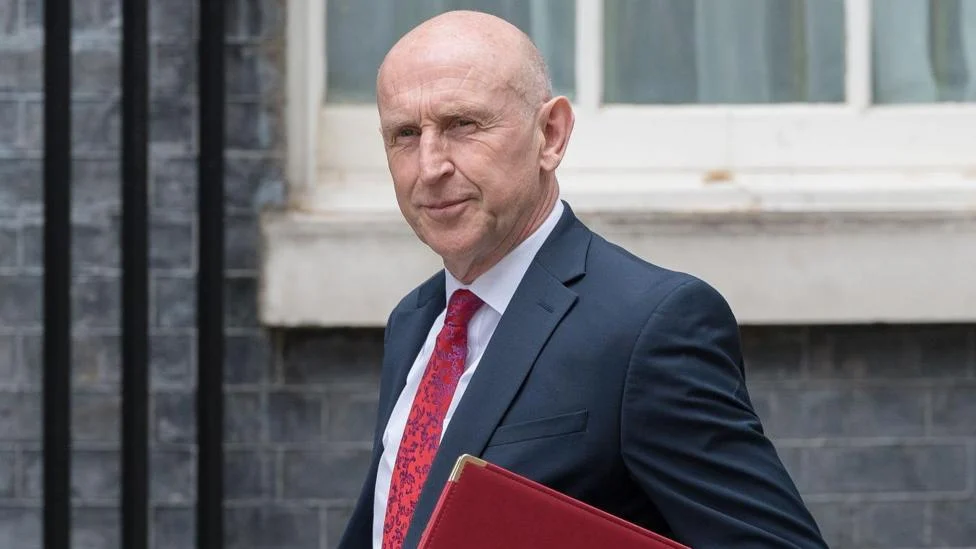
The UK government borrowed more than anticipated in July, presenting a fresh challenge for Chancellor John Healey as he prepares for his first Budget on 27 October. Data from the Office for National Statistics (ONS) revealed that borrowing—the difference between government spending and tax revenue—reached £1.8bn for the month. This figure was significantly higher than the £500m surplus that official forecasters had predicted, resulting in a £2.3bn overshoot.
While the July borrowing figure was substantially lower than the £16bn recorded in June, largely due to a seasonal surge in self-assessed income tax receipts, economists warned that public finances face mounting pressure. Once this one-off tax lift fades, the underlying fiscal situation remains strained. Increased welfare spending, including state pension payments and other benefits, contributed to the pressure, with social payments rising by £2bn compared to the same period last year.
For the first four months of the current fiscal year, total borrowing has hit £56.7bn. Although this is lower than the same period last year, it remains £2.3bn above the projections set by the Office for Budget Responsibility (OBR). Chancellor Healey has pledged to maintain “strong fiscal discipline” in his upcoming Budget, adhering to the fiscal rules established by his predecessor, Rachel Reeves, which mandate that all day-to-day spending must be funded through tax receipts by the end of the decade.
Economists have cautioned that these figures limit the room for maneuver for both Healey and Prime Minister Andy Burnham as they seek to address the cost of living. Ashley Webb, a senior economist at Capital Economics, described the data as part of a “run of bad news” for the economy, suggesting that the government will have little scope to increase borrowing. Joe Nellis, head of economic research at MHA, added that the figures will not prevent the need for difficult decisions, noting that the Chancellor must find additional tax revenue or tighter spending controls to balance the books and avoid unsettling financial markets.
In response to the figures, Healey stated that the government is “cutting the deficit faster than any other G7 economy” while simultaneously providing support to help people with cost-of-living pressures and assisting young people into the workforce.
Political opposition has been swift to criticize the state of public finances. The Conservatives highlighted that the total national debt is nearing £3tn, with Shadow Chancellor Mel Stride arguing that the cost of servicing this debt now exceeds combined spending on defense, police, and prisons. Meanwhile, the Liberal Democrats accused the government of an “anti-growth agenda.” Treasury spokesperson Daisy Cooper urged the Chancellor to “take the handbrake off Britain’s economy” in the autumn Budget, specifically calling for measures to lower energy bills and support high street businesses.
Economic headwinds were further highlighted by the ONS report on retail sales, which fell by 0.5% in July. Analysts attributed this decline to a cooling off after a June boost driven by hot weather and the World Cup, with clothing and footwear sectors seeing their weakest growth since May of the previous year. The report also notes that having grown by £127.2bn a year earlier, the ONS also said Britain’s overall debt pile is approaching £3tn. The report also notes that the Conservatives said Labour’s spending would leave “ordinary families” left to cover the bill. The report also notes that we simply cannot afford the price of Labour.







Comments